Cart
0
The fall stock is on the floor now — racked, steamed, sized, and, if we may say so, the best-looking September floor we have had in years. Here is the part most men never see: almost none of it was decided this fall. Running a Montreal menswear store means doing your September shopping in the dead of last winter, in showrooms, with a calculator and a firm opinion about what the men of this city will actually wear. So this week, instead of telling you what to buy, we thought we would tell you why we bought it.
The buy happens eight months out
In January and February, while we were hemming winter trousers and watching the snowbanks grow, we sat down with the Fall 2026 collections. Some houses come to us; others we work through their Montreal showrooms; Jack Victor we can visit across town, where their tailored clothing is still cut and sewn in this city. Orders went in before the snow melted. Then the mills wove, the factories cut, the ships sailed, and eight months later a sweater lands on Decarie Boulevard looking as though it simply appeared.
Trend reports play a smaller part in this than you might think. We buy for men we know by name: the lawyer who wears a suit four days a week, the executive whose office quietly gave up on ties two years ago, the client who is retired and still will not leave the house without a collar. Before anything earns a purchase order, it has to answer one question — which of our customers wears this, and where?
What a Montreal menswear buy has to survive
Weather, first. A fall buy for this city has to work at twenty-two degrees on a mild September afternoon and in freezing rain by early November — sometimes in the same fortnight. That is why so much of what we bought comes down to texture and layers rather than bulk: flannel trousers, knits that sit cleanly under a jacket, sport coats with enough character in the cloth to stand alone once the tie disappears.
Dress codes, second. Montreal offices keep drifting toward tie-optional, and we buy accordingly — collars with structure, jackets interesting enough to carry an open neck. And a confession of taste: we bought more brown this season than navy. Chocolate, tobacco, taupe. Navy will never leave this store, but brown is what looks new against a gray November street, and this year we put our money where our opinion is.
Why we said yes to a new knitwear house
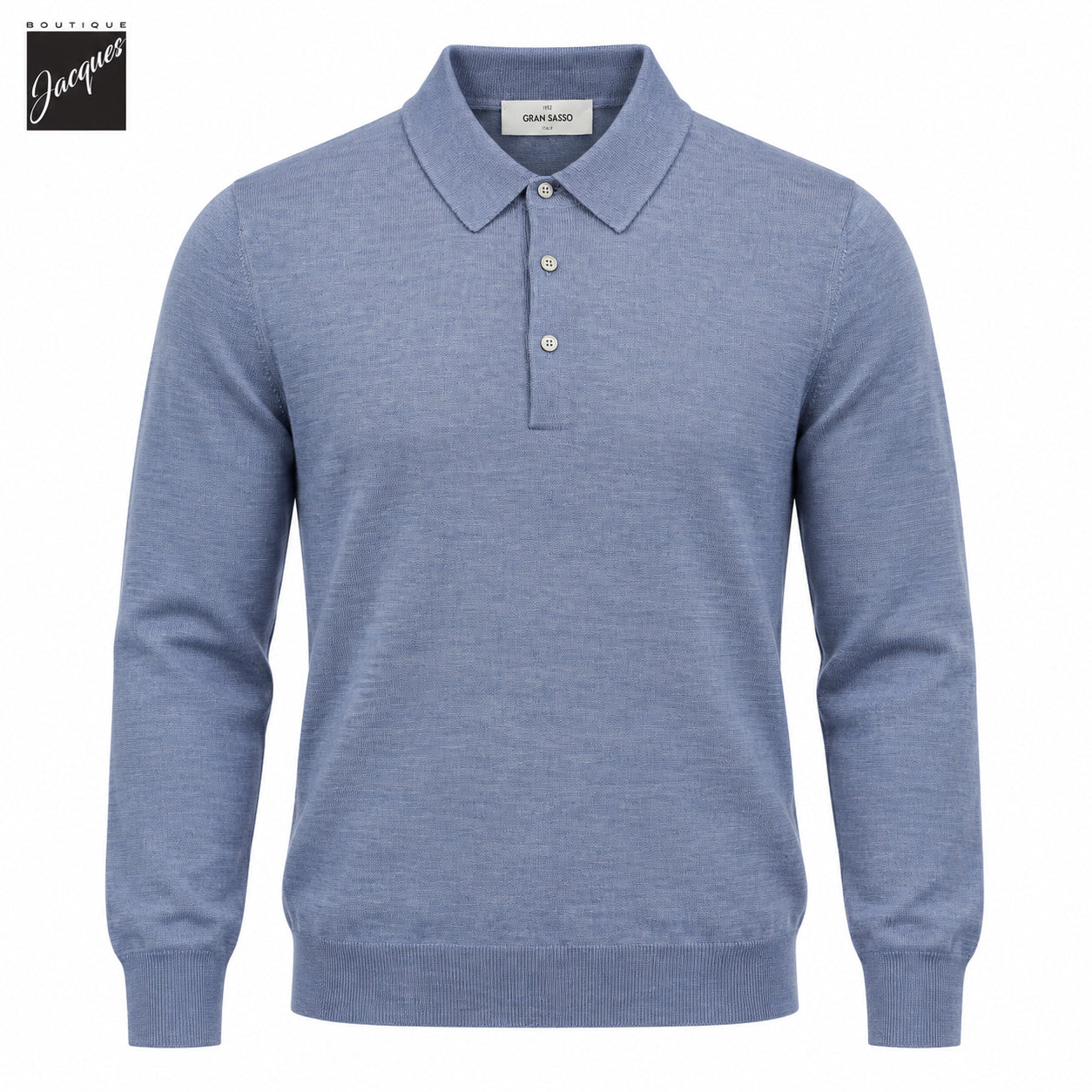
The clearest example of the merchant's dilemma this year was Gran Sasso, the family-run knitting house from Abruzzo that joins us this fall. We had been offered the line before, and we passed — not because the knits weren't good, but because a new brand has to displace something, and our knitwear wall was already spoken for.
Two things changed our mind. The first was the knitted polo. Their ultrafine wool-and-silk long-sleeve polo ($450) is the most useful garment for a tie-optional office we saw all winter: enough collar for a jacket, enough ease for a Friday. The second was arithmetic. Superfine wool crews at $325, a Geelong wool cardigan-overshirt at $625 — for knits made in Italy by a family that has done nothing else since the 1950s, the pricing made too much sense to walk past a third time. They are on our sweater wall now, and we would rather you judge them by hand than by paragraph.
What we walked past
A buy is mostly refusals, and you deserve to hear a few of ours. We passed on the cropped, shrunken jackets that photograph beautifully and flatter almost nobody over thirty. We passed on a coat program we liked very much, because once currency and duty were counted, the landed price was one we could not defend across the counter — better to show you nothing than a coat we would have to apologize for. And we passed, as we always do, on anything our tailors cannot alter. If a garment leaves no cloth to work with, it does not belong in a store that fits real men.
The result of all those winter decisions is hanging in the new fall arrivals right now. Come walk the floor while every size is still on the rack — mid-September is the best browsing of the entire fall. And if you would rather have our eyes on the problem, book an appointment and we will show you exactly where our money went, and why.