A man stood at our counter last week being fitted for December — the first wave of party invitations is already in the mail — and as we settled the shoulders of his jacket, his hand hovered over the breast pocket. "Do people still do the handkerchief?" The question of how to wear a pocket square reaches our Montreal counter every November, and it almost always arrives like that: sideways, braced for a lecture. There is no lecture. There is one short answer, a few rules, and a price tag smaller than any other decision on the tailoring floor.
The short answer: yes, people still do — fewer than before, which is precisely the opportunity. A generation ago the square was furniture; every breast pocket in every office downtown carried one, and it said nothing because everyone's did. Now it is optional, and optional is where style actually lives. The tie clocked out of most Montreal offices years ago — we wrote this fall about the days it should clock back in — and the breast pocket quietly inherited part of its old job: the small, deliberate signal that a man finished dressing on purpose. An empty pocket is correct. A well-handled square is better than correct.
How to wear a pocket square: start with white
If you own one square, make it plain white cotton or linen, and fold it flat. The fold has a television name — the TV fold — and a simple geometry: a rectangle in the pocket showing a quarter to half an inch of white above the welt, parallel to the ground. That is all. It works with every suit and jacket on our wall, it reads as effort without a trace of flourish, and it answers nine occasions out of ten — the same arithmetic we offered about white squares in our tie guide last month, and we stand by it. With a black suit after dark, it is not merely the safe answer; it is the only one we endorse, a position we took in our cocktail-attire guide and will not be softening. Weddings, eulogies, award dinners, the client who flew in from Zurich: white, flat, done.
The white square is also the one you may already own. Check the drawer where the gift handkerchiefs went to retire. If it is crisp cotton and still white, it is not retired. It is waiting.
Silk speaks at an angle
The second square is where the pleasure starts, and where the one firm rule lives: never match the square to the tie. A matched set reads as rented. We said it in October and we will keep saying it, because the matched set keeps walking past the window. The rule actually extends further — the square should not match anything exactly. Its job is to echo: pick up a minor colour from the tie, the check of the jacket, even the watch strap, and repeat it quietly in a different pattern. The square speaks at an angle to the rest of the outfit, never in unison.
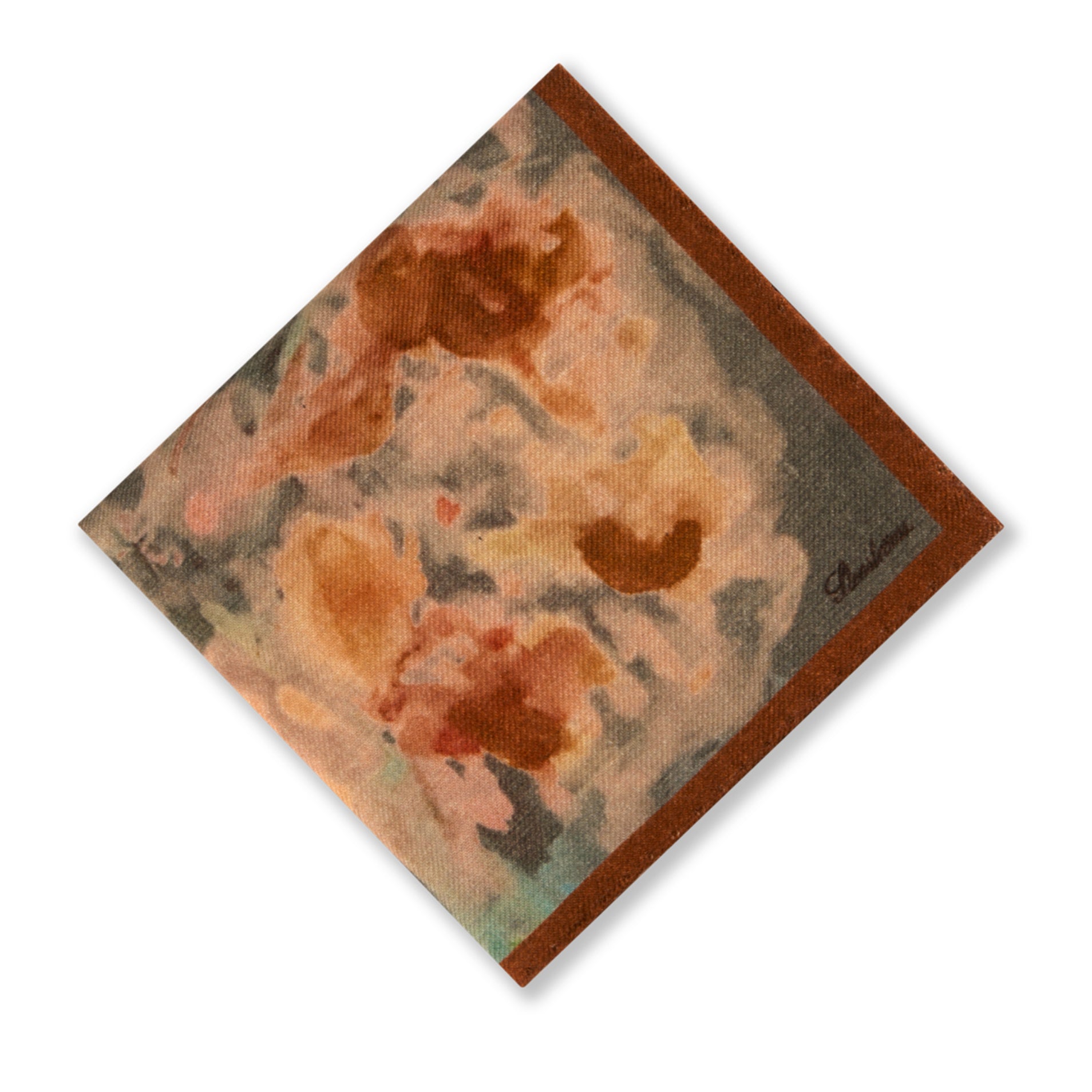
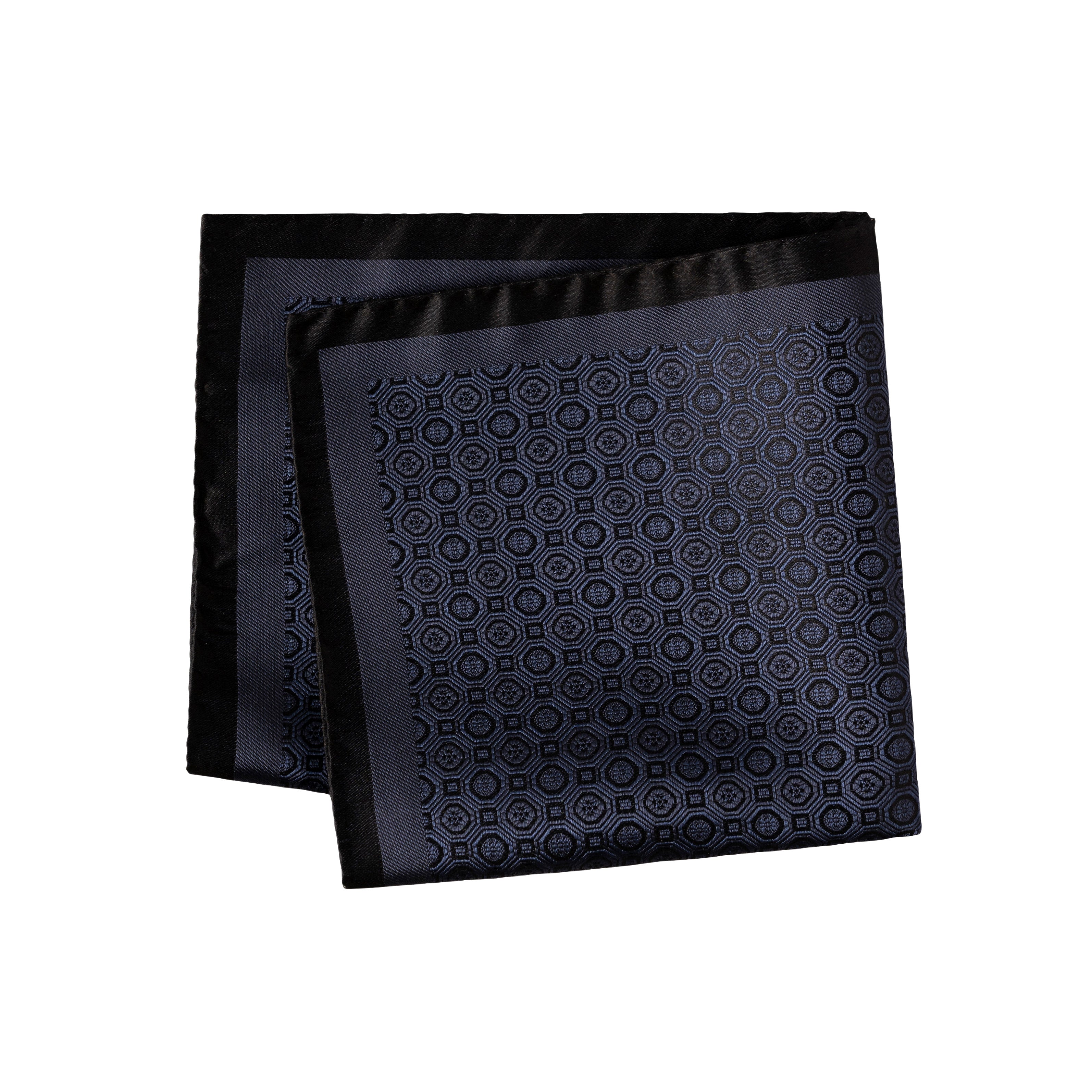
On our wall right now, the square we reach for first is ETON's navy medallion in woven silk ($110). Woven, not printed — the pattern sits in the weave, so it absorbs light instead of bouncing it, for the same reason we steer men toward woven ties: shine reads as effort, depth reads as taste. Above a gray flannel trouser and under almost any jacket we sell, it simply belongs. The second is the brown medallion in dyed silk twill ($110) — brown being where this season's wardrobes have been leaning since September, the square follows the cloth. There is exactly one in the drawer as we write this. And for the evening weeks ahead, ETON's champagne solid silk ($110) does what white does, with candlelight in it — the near-white answer above a dark jacket when the invitation says festive and you have no intention of proving it with a reindeer.
Two folds are enough
The TV fold for cotton and linen; the puff for silk. The puff takes ten seconds: pinch the square at its centre, let the corners fall, gather it loosely, fold the tails under, and set it in the pocket. One adjusting pass with two fingers, then stop. The goal is a square that looks placed by a confident hand, not arranged by a nervous one — and emphatically not folded into geometry. The crowns, the sailboats, the four-point peaks: those belong to weddings and magicians, in that order. A square fussed into architecture announces that its owner practised. A puff says he did not need to.
When to leave the pocket empty
There are days for the bare welt. A first meeting with a new client is one — we gave that advice in our business-dinner guide and it holds; the square can wait for the second meeting, once the room knows you by your work. And whatever the day, the square shares its pocket with nothing. Not glasses, not a pen, not the phone — a loaded breast pocket bows the chest of a jacket in a way no accessory can repair. The square weighs nothing and displaces nothing, which is half of why it earned the address.
The whole category costs less than a sleeve alteration, and the decision takes five minutes at the counter — ideally with the jacket on your shoulders, because a square is chosen against cloth, not in the abstract. Bring the jacket to the shop on Decarie, or book a few minutes with us and we will let the squares argue it out on the counter glass. The pocket has been there all along. It was only ever waiting for a reason.