The expensive questions of the season have already been answered in these pages — the overcoat in October, the parka last week. This one costs nothing, and almost nobody asks it: how to care for a winter coat once you own it. Which is strange, because no garment you own works harder. A winter coat in Montreal is on duty from November to April, six days out of seven, in weather that would retire most clothing by February. Five unhurried minutes a week decide whether it looks like itself in March or merely looks like it survived.
How to care for a winter coat: the brush does most of it
For a wool coat — overcoat, car coat, anything with a lapel — the most important tool is not a cleaner. It is a horsehair brush, and the habit of using it. A city settles on a coat all day: dust, exhaust, the fine grit that blows down Decarie every time a truck passes. Left alone, it works into the fibre and dulls the cloth. Brushed off that evening, in long downward strokes with attention to the shoulders and collar, it never gets the chance.
We have argued before in these pages that tailoring is dry-cleaned far too often, and the coat is the strongest case of all. Once a season — in spring, before it goes away — is plenty. Solvents tire wool; a brush, a shot of steam to lift the wrinkles, and a night of rest do the real maintenance. Hang it on a wide hanger that fills the shoulders, give it room in the closet to breathe, and never — we will keep writing this sentence as long as this city keeps its radiators — dry a wet coat on or near one. Wool wants to dry slowly, at room temperature, on the hanger. Heat is how a coat loses its shape and its temper in the same afternoon.
The salt comes off tonight, not in April
Any week now the trucks will be out, and every hem in the city will start collecting the same white tide-mark. Salt is the one thing on this list that will not wait. The evening it happens, wring a cloth out in cool water with a splash of white vinegar and wipe the entire lower panel of the coat — not just the mark, or you trade a salt line for a water line — then let it dry away from heat. Done the same night, it takes two minutes and leaves nothing. Done in April, it has had five months to set.
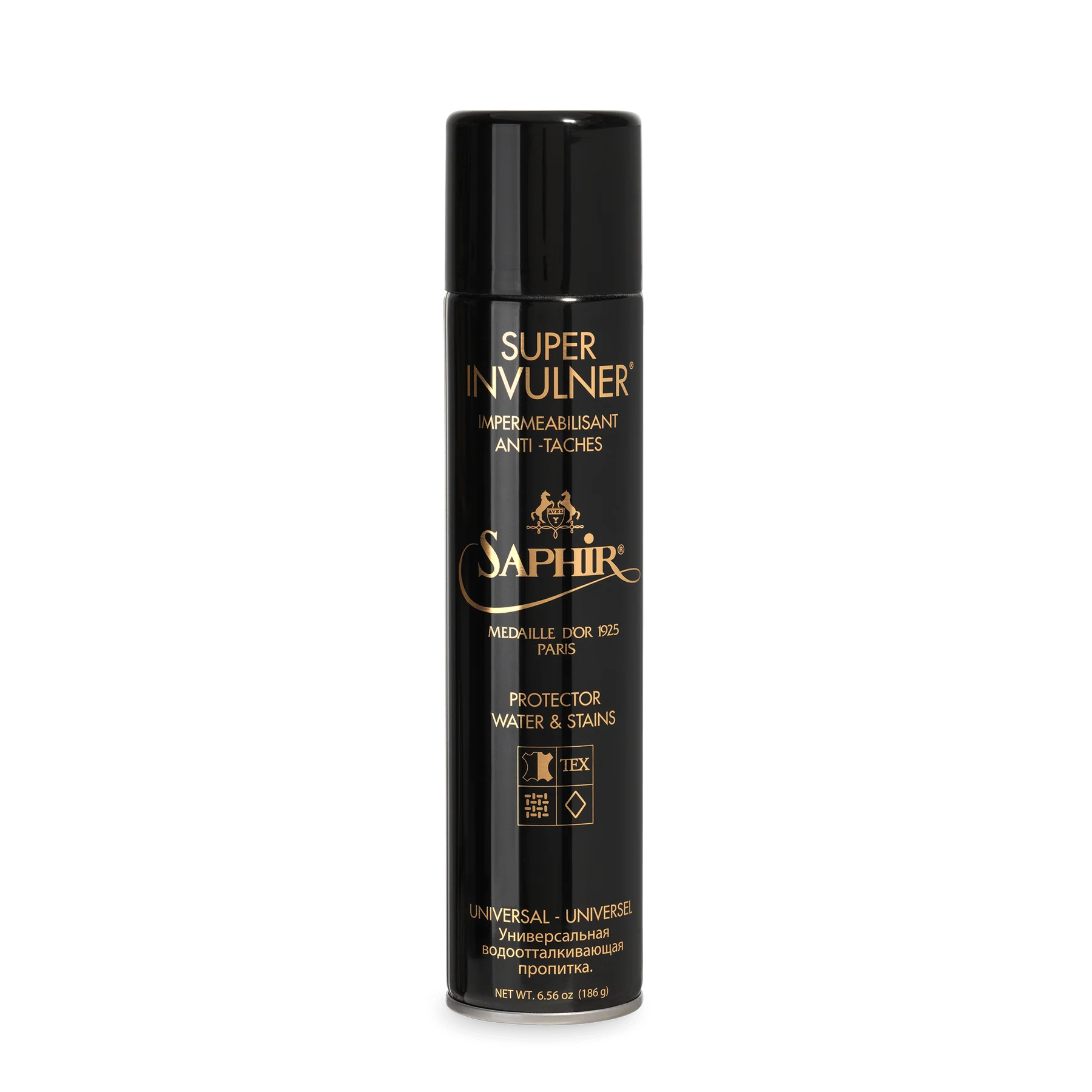
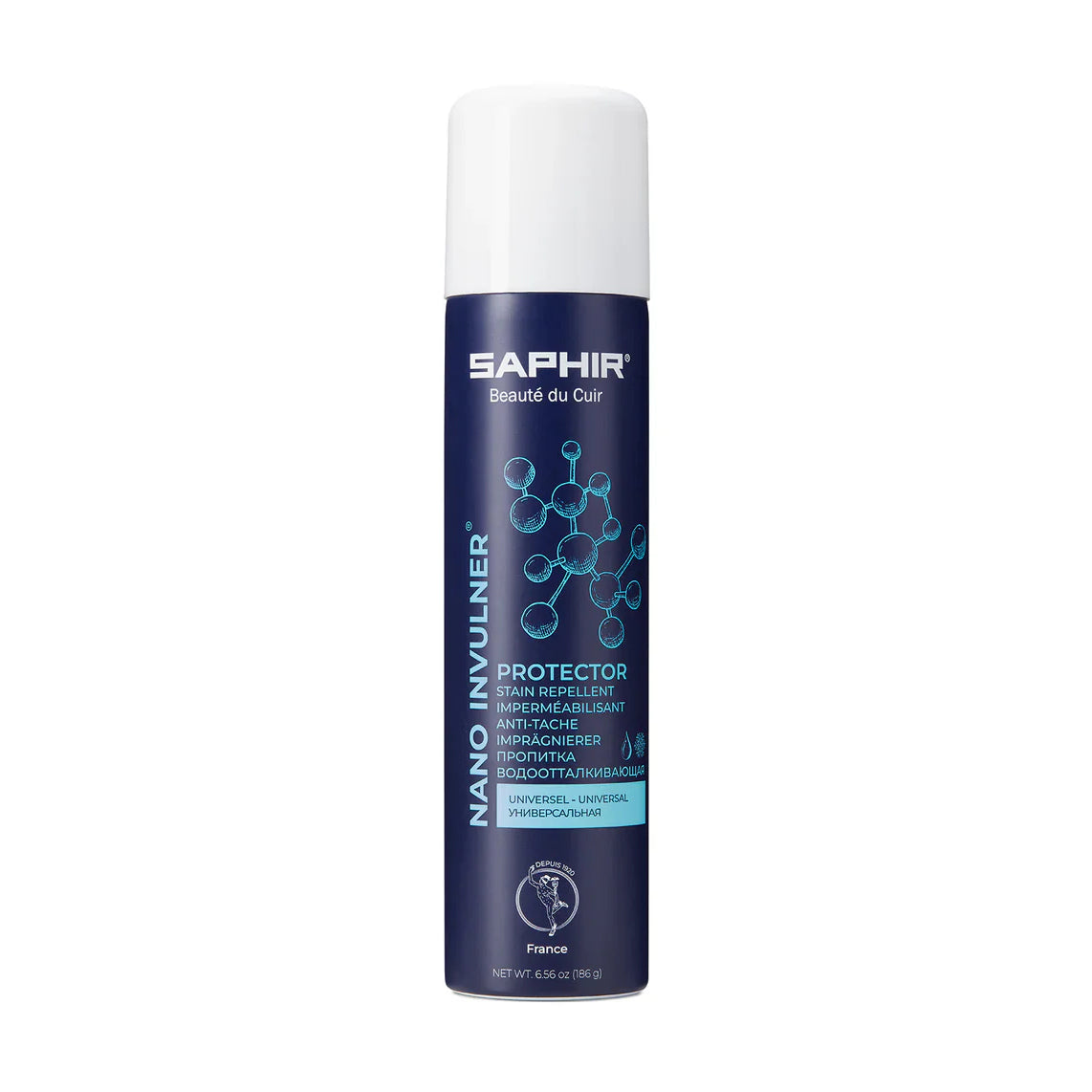
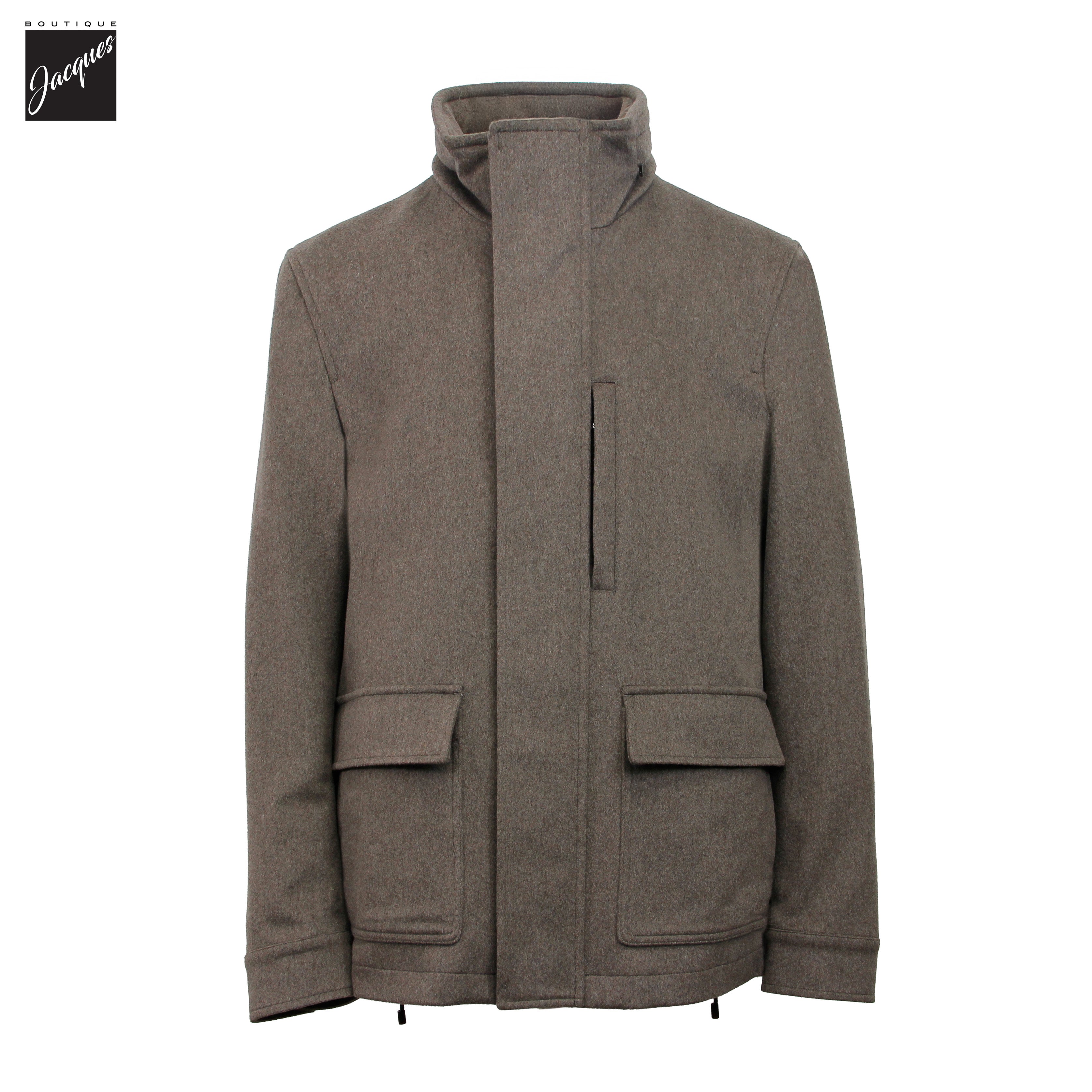
This month is also why we point certain men toward the Luigi Bianchi taupe Rain System overcoat: pure wool with Loro Piana's water-repellent treatment and a hood zipped away under the collar, it shrugs off the freezing drizzle that ruins ordinary Novembers — though even treated wool appreciates having the salt wiped off its hem. And a word for what is below the hem: your shoes take the worst of it. Saphir now makes a dedicated snow and salt stain remover for leather, and it earns its place on the hallway shelf by December.
Down is washed, not dry-cleaned
Here is the one that surprises people. Most men assume anything stuffed with feathers goes to the dry cleaner by default. Very often the label says precisely the opposite. The Paul & Shark Typhoon parkas on our wall, for instance, ask for a cool machine wash on delicate and forbid dry cleaning outright — solvents strip the natural oils that make down loft, the same way they tire a sweater. So read the label, and believe it.
Once a season is enough. Between washes, a damp cloth on the collar and cuffs — where skin and glove do their slow work — keeps the coat presentable. When you do wash it, the drying is the whole job: down that dries in clumps insulates like a coat full of wet socks, so be patient, shake the baffles out as it dries, and do not put it away until it is fully lofted and bone dry. And never store a down coat compressed. It spends its life trying to hold air; let it.
Bring it in before December does
Some of this is not a home job. A loosening button, a drooping hem, a torn pocket lining, a cuff gone shiny — our tailors handle coat repairs in-house, and in mid-November that still means days rather than weeks. It will not mean that in December. If last winter left a mark on the coat you own, or if this is the winter you finally buy the one worth keeping, the outerwear wall and the workroom are both at 6224 Decarie, and an appointment takes less time to book than a salt stain takes to set.
The coat stands between you and the worst this city can do. Five minutes a week is not much to offer it in return.