Septembre à Montréal suit un horaire. La première semaine, vous portez votre veste à la main. La deuxième, vous la portez sur le dos. À la fin du mois, vous réfléchissez sérieusement à ce qui va en dessous — et c'est là que commencent les questions sur les chandails. Chaque automne à la boutique sur Décarie, quelqu'un soulève deux cols ronds et nous interroge, avec raison, sur les chandails en cachemire pour homme et les chiffres sur leurs étiquettes : pourquoi celui-ci est-il à 890 $ et celui-là à 365 $, alors qu'ils se ressemblent presque sur la table? Nous préférons répondre franchement plutôt que de laisser le mystère faire la vente.
La réponse courte : la fibre d'abord, la construction ensuite, la finition en troisième. La réponse longue est plus utile, alors la voici.
La fibre représente l'essentiel du prix
Le cachemire n'est pas une matière unique. Il est classé selon la longueur et la finesse de la fibre, et la différence entre les grades est celle entre un chandail qui s'améliore pendant dix ans et un autre qui abandonne en un an. Les fibres longues et fines — le bon peignage — se filent en un fil qui se tient, résiste au boulochage et s'adoucit graduellement à l'usage. Les fibres courtes coûtent beaucoup moins cher, et une filature peut les brosser jusqu'à ce qu'elles semblent stupéfiantes au comptoir. En février, cette douceur empruntée arrive à échéance, une bouloche à la fois. Notre règle : quand un chandail semble impossiblement doux et que le prix semble impossiblement gentil, la douceur a été prélevée sur l'avenir du vêtement.
Et la laine mérite plus de respect qu'on ne lui en accorde. Un col rond en mérinos superfin ou en laine Geelong d'une filature italienne sérieuse surpassera un « 100 % cachemire » médiocre sur tous les plans qui comptent — la tenue, la durabilité, l'allure en troisième année. Nous dissuaderons volontiers un client d'acheter un mauvais cachemire au profit d'une bonne laine. Ce n'est pas la phrase la plus luxueuse à prononcer, mais c'est la plus vraie.
Quand un chandail en cachemire vaut 890 $
Nous tenons les cols ronds en pur cachemire de Stenströms en gris et bleu pâle à 890 $, et nous croyons qu'ils sont à leur juste prix. Ce que vous payez, c'est un fil à fibres longues, un tricot dense qui drape au lieu de coller, et une construction entièrement diminuée — les panneaux sont tricotés à la forme et remaillés ensemble, pas coupés dans une nappe et cousus comme un t-shirt. Porté à même la peau un matin de février, la différence n'a rien de subtil. Si vous voulez un seul chandail qui vous accompagne une décennie, c'est celui-là.
Et voici quand ne pas l'acheter : s'il doit vivre sous une veste sport cinq jours par semaine avec une bandoulière sur l'épaule. C'est un travail de cheval de trait, et le pur cachemire n'est pas un cheval de trait. Achetez le mélange et laissez-le gagner sa place. Un bon mélange n'est pas un compromis; c'est le bon outil, honnêtement nommé.
Pourquoi nous avons fait venir Gran Sasso à Montréal cet automne
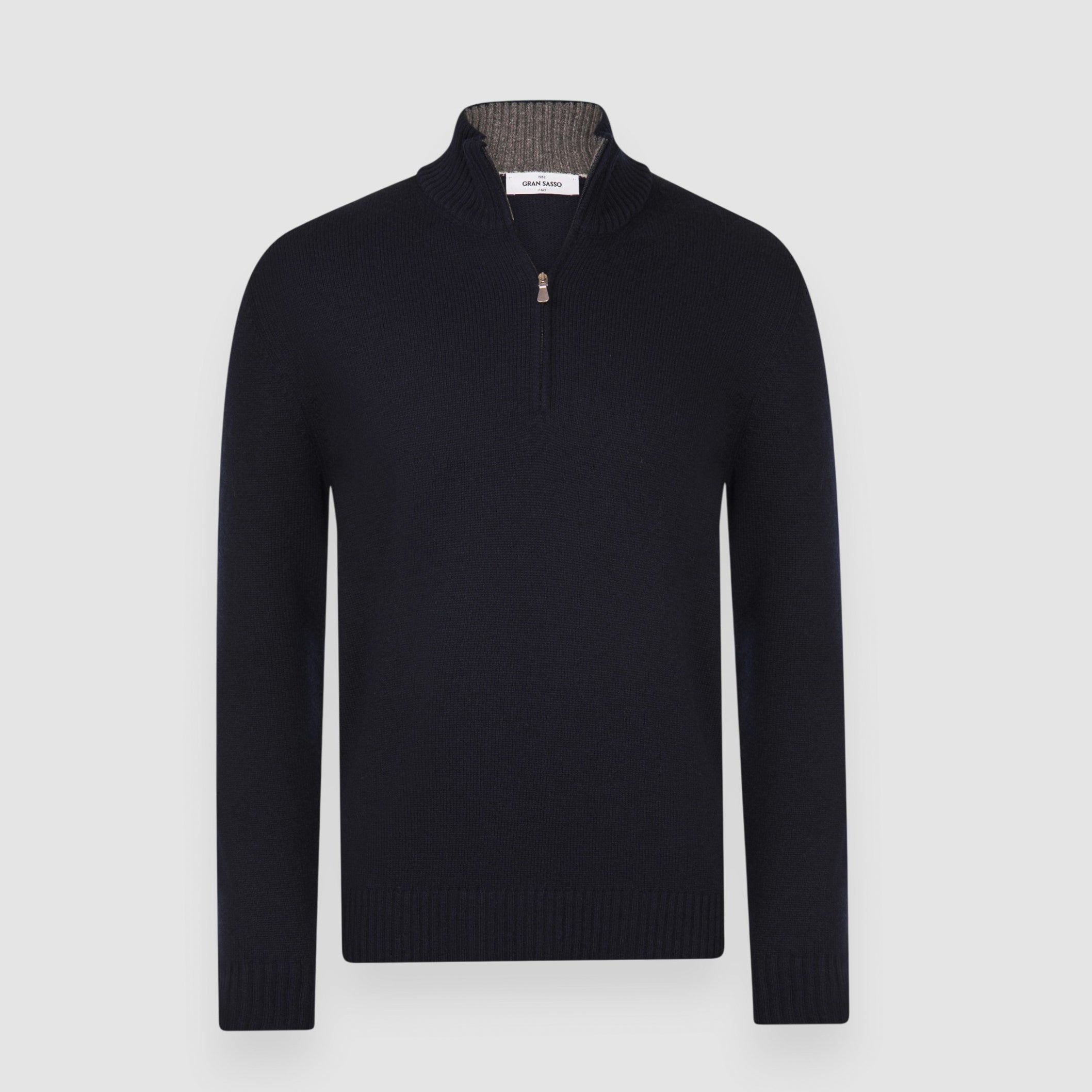
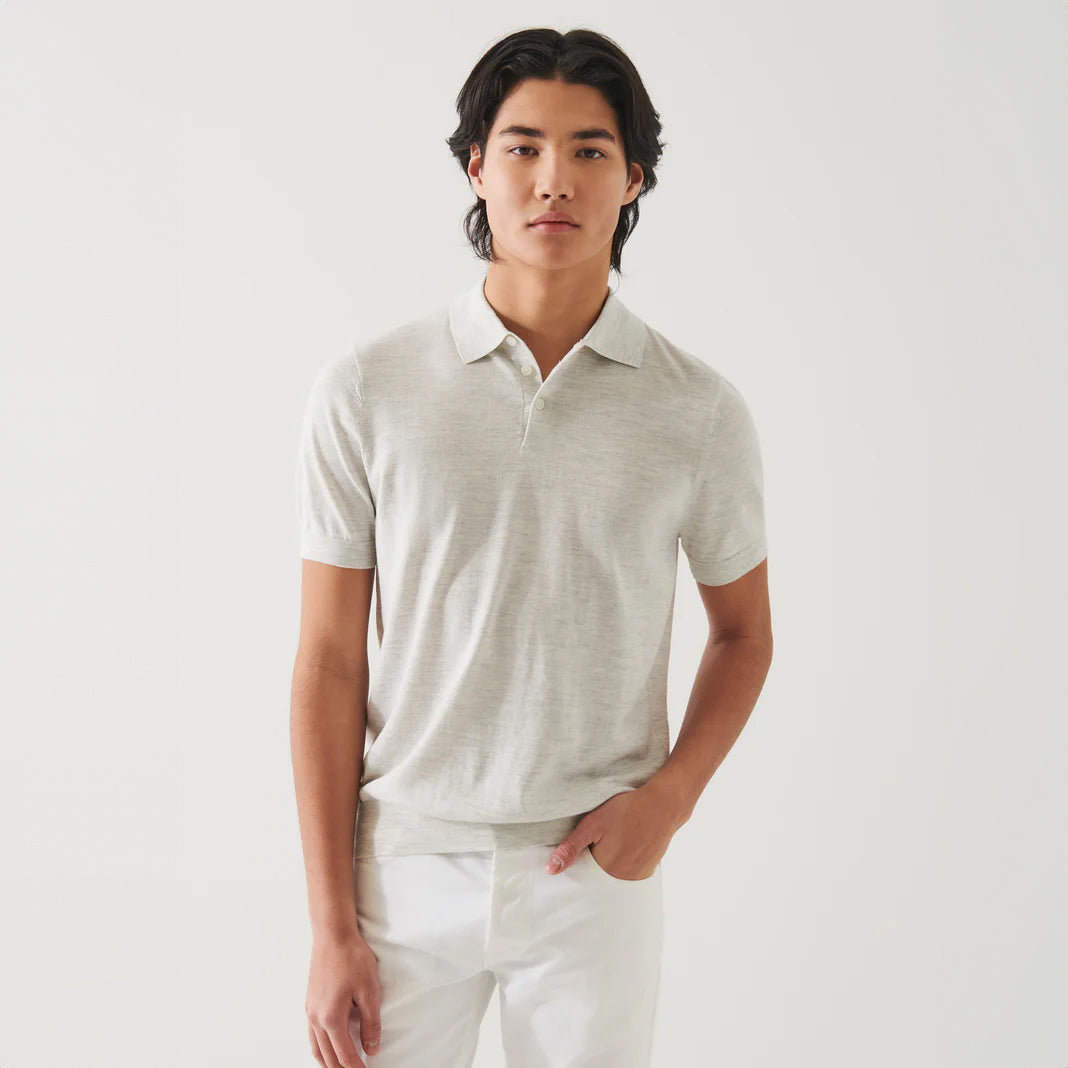
Ce qui nous amène au nouveau nom sur nos étagères. Gran Sasso est une maison de maille familiale des Abruzzes qui fait une seule chose — tricoter — depuis trois générations, et cela se voit dans les prix autant que dans le produit. Leur demi-zip marine en laine et cachemire est à 475 $ : assez de cachemire pour le sentir, assez de laine pour s'y fier. Le col rond en laine délavée vintage en brun et le polo tricoté marine se situent à 325 $, et le polo tricoté fait discrètement après dix-huit heures ce que fait une chemise habillée, sans que l'absence de cravate n'ait l'air d'une dent manquante. Le cardigan-surchemise crème en laine Geelong, à 625 $, résout le problème bureau-chauffé-rue-froide mieux que la plupart des vestes que nous pourrions vous vendre.
Notre opinion, offerte gratuitement : le demi-zip marine sur une chemise ETON est l'uniforme de bureau de cet automne. Il respecte un code vestimentaire sans le saluer.
Achetez moins souvent, gardez plus longtemps
Quel que soit votre choix, accordez-lui des jours de repos — la maille reprend sa forme entre les ports — et lavez-la bien moins que vous ne le pensez. Pliez-la, ne la suspendez jamais. Faites cela, et les bons chandails survivront au cycle des tendances par une marge confortable, ce qui est le calcul discret qui rend un chandail sérieux bon marché.
La gamme complète se trouve dans nos nouveautés d'automne, et la table de mailles à l'avant de la boutique est à son meilleur en ce moment, avant que les tailles ne s'épuisent. Venez sentir vous-même la différence entre les grades — ou prenez rendez-vous et nous vous guiderons, deux chandails en main, sans aucun mystère.