Every few weeks a man stands at our counter on Decarie Boulevard holding a shirt that cost real money and died young. The cloth itself is fine — it had years left in it. But the collar has frayed, the buttons are chipped, and the body has taken on the particular shine of a hundred trips through an industrial press. Knowing how to care for dress shirts is not complicated. The trouble is that the standard routine — the Monday-morning drop-off at the cleaner, the dryer on busy weeks — works quietly against the shirt. Here is the advice we give a client when he buys a good one, written down at last.
Stop dry cleaning your shirts
We have said this about suits, and it is doubly true of shirts. A dress shirt is cotton, and cotton wants water. Dry-cleaning solvent was designed for wool and structured garments; it does a mediocre job on what a shirt actually collects, which is sweat and skin oil — both water-soluble. What the dry cleaner is really selling you is the press, and the press is the problem. Hot plates flatten the natural roll out of a collar, put a glaze on the cotton, and crack buttons one by one. Go count your chipped buttons tonight. Each one was a trip through the machine.
Your suit can keep its cleaner, used sparingly — tailoring is a different animal. If you use a shirt laundry, and many of our clients sensibly do, two requests change everything: hand-pressed, and no starch. Starch makes a shirt look crisp for four hours and ages it for good, stiffening the fibres until they crack at the folds. Unless there is a tuxedo involved, skip it.
How to care for dress shirts at home: the wash
Collar stays come out first — always. A collar stay through the wash ends up warped, and a warped stay telegraphs through the collar forever. Unbutton everything, including the collar and cuffs; a buttoned shirt tumbling in the drum pulls at its own buttonholes all cycle long. Give the inside of the collar thirty seconds of attention before it goes in — a drop of liquid detergent worked in with your thumb is enough. Then thirty degrees, a gentle cycle, and a drum no more than half full.
After that comes the only rule we consider absolute: no dryer. Ever. The dryer is where collars shrink, stains set permanently, and a 16-neck becomes a 15.75. Hang the shirt straight out of the machine on a hanger with proper shoulders, button the top button, and smooth the collar and cuffs flat with your palm. That one minute of smoothing saves five minutes of ironing.
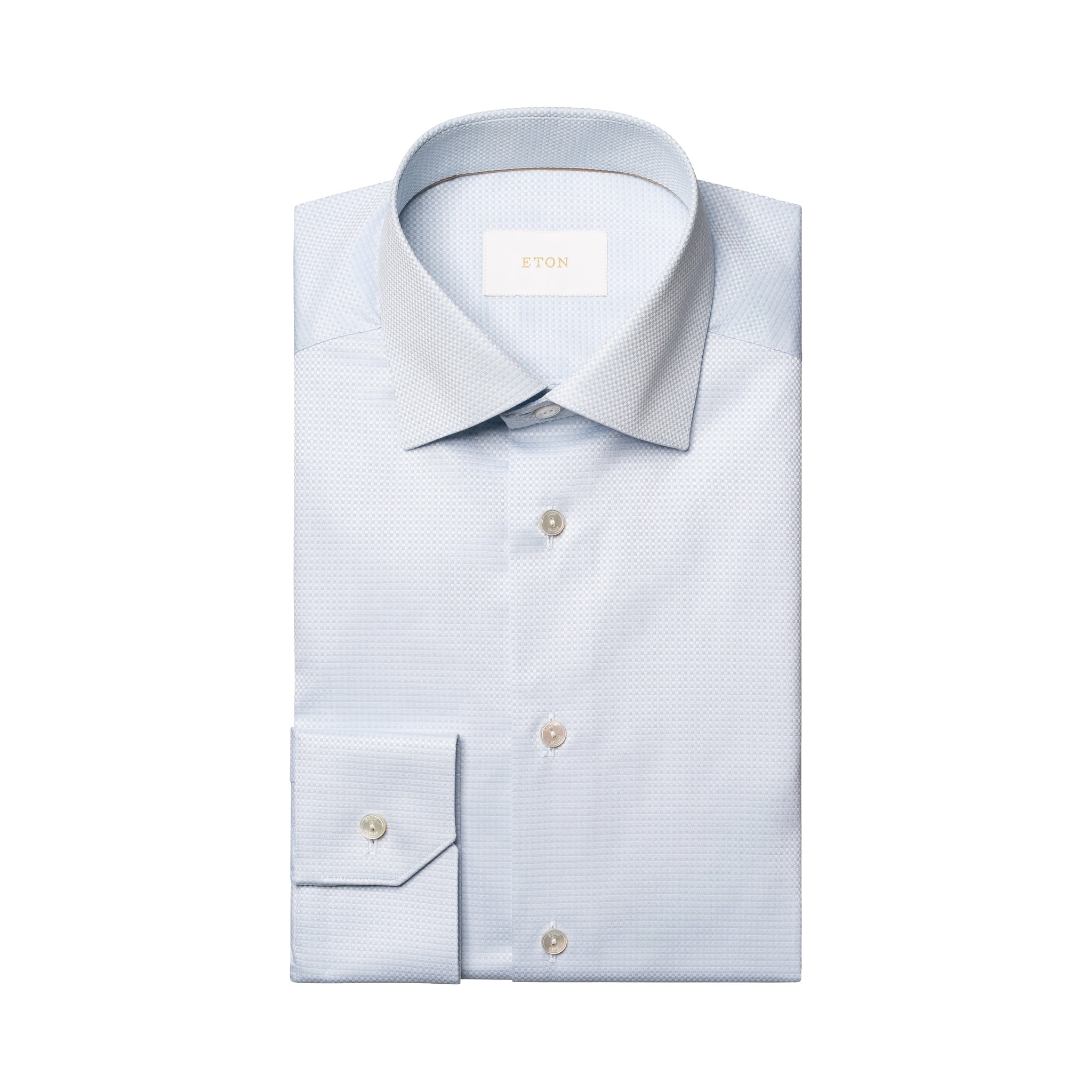
It is also, not incidentally, exactly the routine ETON engineered their signature twill around — hung to dry, it comes back needing almost no iron at all. Stenströms cloth asks a little more of you at the board, and repays it in how the shirt feels in year five.
Ten minutes with the iron
Iron the shirt while it is still slightly damp; bone-dry cotton fights you. Collar first, from the points in toward the centre, both sides. Then cuffs, then the yoke across the shoulders, then sleeves, then the body. A steamer is a fine tool for knitwear and suits, but on cotton twill it produces a shirt that looks relaxed rather than pressed — there is a difference, and a client dinner will find it. Our honest opinion: a decent iron and ten quiet minutes on Sunday evening will do more for how you look this week than most things twice the effort.
Rotation is a Montreal problem
From November to March, a shirt in this city spends its working life under a merino sweater in a heated office. So here is some honesty that saves both money and cloth: a shirt worn one day under knitwear does not automatically need washing. Check the collar and the underarms; if they pass, hang it, give it a day of air, and wear it again later in the week. Every wash and every press costs the shirt a little of its life. So does wearing it two days running without rest.
Seven or eight shirts in rotation is the comfortable number — each one works once a week and rests properly between shifts. And know when to let one go. A frayed collar has earned retirement to weekends under a crewneck, not another year of meetings. If the rotation has thinned, the dress shirt wall is fully stocked for the season. And if collars never seem to sit right no matter how you press them, that is a fit question, not a laundry question — book a half hour with us and we will sort out which cut your neck and shoulders actually want. The shirt should outlast the trend, the winter, and quite possibly the suit. Cared for properly, it will.