Cart
0
Every September, the same phone call finds us on Decarie Boulevard. A man has a new job — a better title, a new firm, sometimes a new city — and he starts Monday. What he is really asking is what to wear on your first day of work, though it rarely comes out that plainly. Usually it comes out as "I just want to get it right." That is a reasonable thing to want. After enough of these calls, we can give the answer in about ten minutes. Here it is in writing.
You already did the reconnaissance
You interviewed there. Once, twice, perhaps five rounds. Whatever else those meetings accomplished, they handed you something valuable: you saw, with your own eyes, how that office dresses. The people across the table were showing you the dress code the entire time.
So the rule is simple. Dress to the level of the best-dressed man you met during the process, then add half a step. Half a step reads as respect — for the role, for the people, for the offer you signed. A full step reads as a costume. If the office wears knits and dark denim, half a step is a sport jacket, not a three-piece suit. We once fit a client who insisted on a full suit for his first day at a software firm in Mile End. He told us later it was the most expensive thing he owned and the least worn; the office never saw it again.
What to wear on your first day of work: the formula
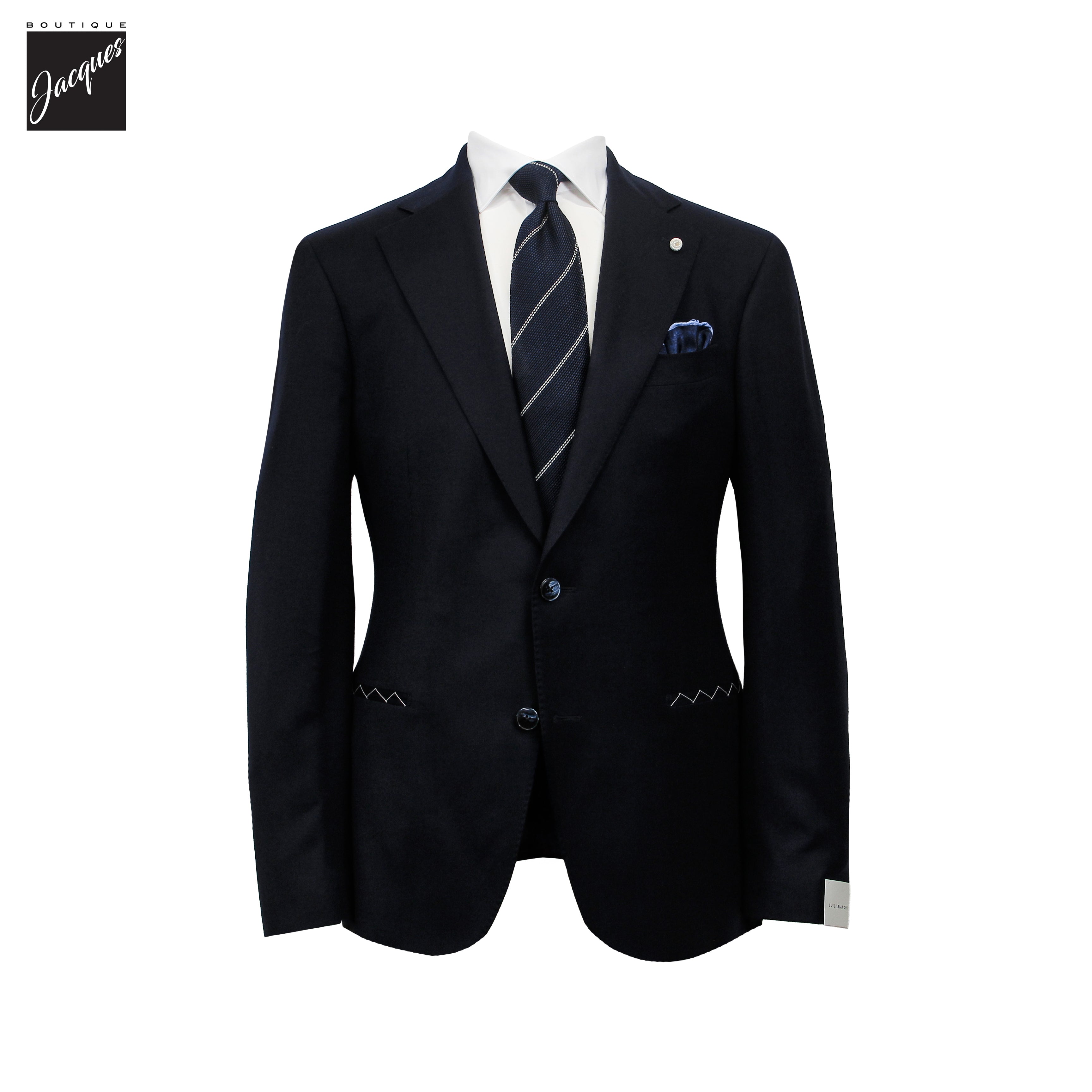
If the office wears tailoring, wear a navy suit. We have argued in these pages that a man's first suit purchase should be charcoal, and we stand by it — but a first day is not a first suit. Navy is the most neutral thing you can say in a room full of strangers: serious, correct at every floor of the building, and impossible to hold against you. Something in the spirit of Luigi Bianchi's navy Drago Skyfall wool-silk suit is exactly the register we mean — a solid cloth with enough depth that it reads rich in person and quiet in the ID-badge photo.
The shirt is white or light blue, and on day one, nothing else. Choose a collar with real structure — one that stands open on its own — because you may decide at the elevator that the tie is too much. On that subject: if you saw ties during the interviews, wear one. If you saw none, leave it, but put a navy one in your bag. It weighs nothing, and no man has ever regretted having a tie within reach at eleven in the morning when the founding partner appears. Our dress shirt wall is organized around precisely this problem.
If the office is tie-optional or jacketed-casual, the formula shifts: a dark textured sport jacket, gray trousers, the same structured open collar. What it must not shift to is the jacket from an old suit pressed into weekend service. An orphaned suit jacket reads exactly like what it is, and someone in your new office will notice.
One new thing, not five
The instinct before a big first day is to buy everything at once — suit, shirts, shoes, belt, coat. Resist it. A man wearing five brand-new things moves like he is still being fitted for all of them. Wear the new suit with a shirt you already trust and shoes that already know your feet. New shoes on a first day are the classic error: someone will walk you the length of the office twice before lunch, and you will spend the afternoon thinking about your heels instead of the names you were just told. Break them in the week before, around the house, on the short errands. Your feet will thank you; so will your handshake.
The part nobody tells you: the calendar
A suit off the rack fits no one perfectly — sleeves, trouser hems, a nip at the waist are almost always in order, and we would rather you look tailored than merely dressed. Our tailors work right here in the store, but proper work takes days, not hours. If you start on a Monday two weeks from now, this week is when to come in. Book a fitting and we will build the first-day outfit and the first-week rotation in one visit. And if the start date has crept up on you, call us anyway at 1-877-393-2789 — we have pulled off small miracles for men who start in three days.
One last thing, because it is the thing we say most often in the fitting room. You already got the job. The interviews are over; the offer is signed. The clothes are not there to win anything on day one. Their job is to be so plainly right that nobody remembers them — so that what your new colleagues remember, on Tuesday, is you.