A client we've dressed for years stood in our fitting room last week and described his closet as two separate countries. On one side: the suits and sport jackets, worn Tuesday through Thursday, downtown. On the other: a drawer of sweatshirts he preferred not to discuss. His question is the question of the decade in menswear, and we hear some version of it every week on Decarie — does the man who works from home two days a week need two wardrobes? He does not. He needs one hybrid work wardrobe: a closet that doesn't care which desk he's sitting at. It is easier to build than he feared, and smaller than the closet he has.
The two-closet trap
The mistake is treating home days as time off from the standard. We understand the temptation — nobody on Monday's video call can see your trousers, and the fleece was right there. But a wardrobe is a habit, and habits don't keep a calendar. The man who dresses well three days and badly two doesn't average out to mostly well dressed; the Monday sweatshirt is what makes the Tuesday jacket feel like a costume, and by November he's wondering why getting dressed for the office feels like putting on a disguise.
We'll say the unfashionable part plainly: we don't believe anyone does his best work in clothes he slept near. Getting dressed is how a day acquires a shape. It worked for the man who once put on a tie to take the train downtown. It works now, at the kitchen table, with no train in sight.
What the camera actually sees
A webcam is an honest but badly cropped portrait photographer. It sees your collar, your shoulders, and roughly eight inches below your chin — which means the pieces that matter on a home day are precisely the ones most men abandoned first. A fine-gauge knit with a real collar or a firm neckline reads beautifully on screen. A sagging crew from a corporate 10K you ran years ago reads exactly like what it is.
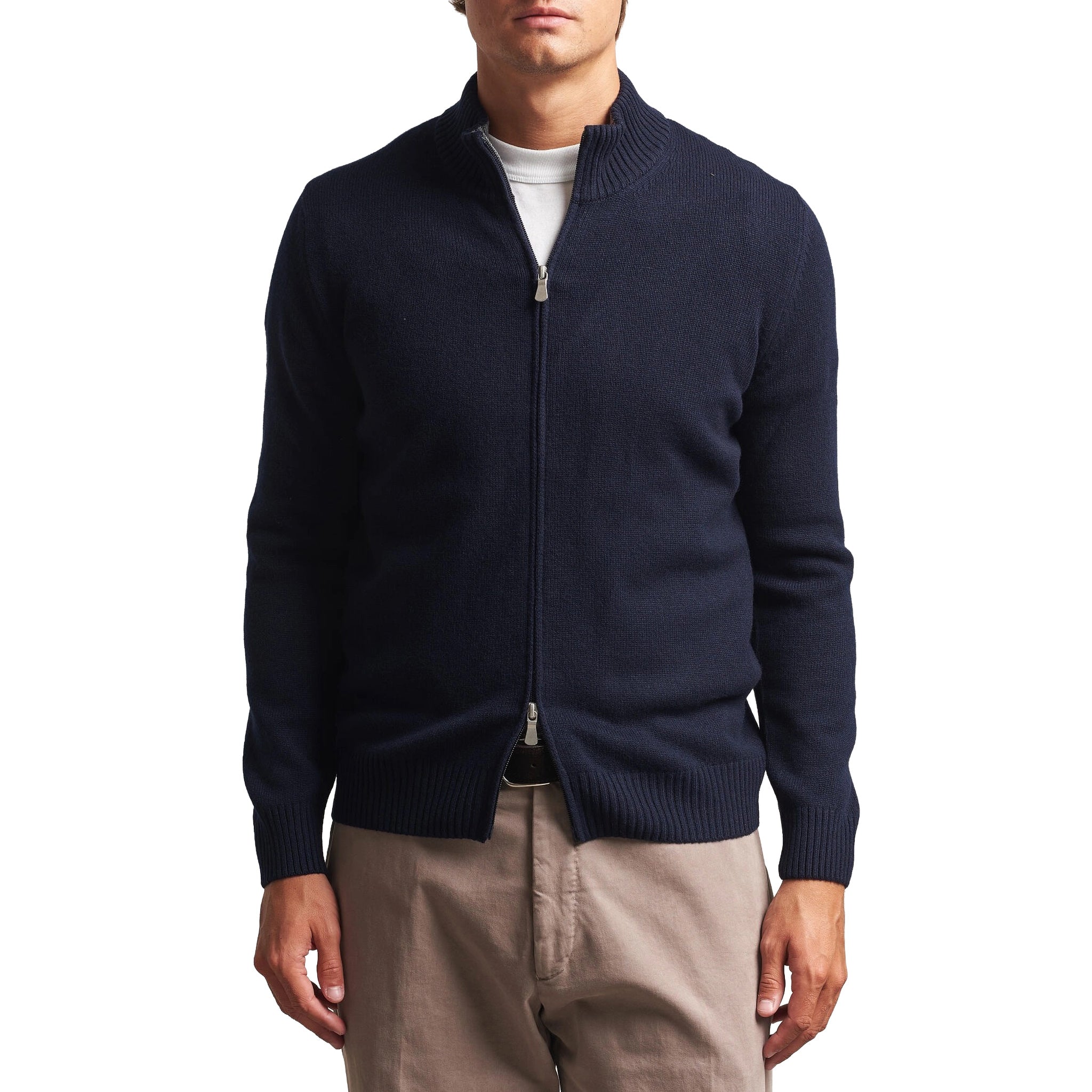
The piece we recommend most often for the home office is the full-zip. Gran Sasso, the Italian knitwear house we brought in this fall, makes one in navy wool, cashmere and a touch of viscose ($525) that has quietly become our answer to this whole category. Zipped to the sternum, it frames the face the way a jacket collar does — which is the entire job on camera. And it solves a problem specific to working from home in this city: a Montreal home office in radiator season swings ten degrees between eight in the morning and noon. A jacket is on or off. A zip adjusts by the centimetre.
What we don't recommend is the half-dressed trick — the proper collar over pyjama trousers. It fails the first time the courier rings, and you know it's a bluff all day, which defeats the purpose. Dress the whole man. He's the one doing the work.
Building the hybrid work wardrobe
Start with trousers that commute. The quiet hero here is technical cloth: Alberto's Ceramica stretch trouser in blue ($305) looks like a dress pant across a boardroom table, holds its crease without being asked, and shrugs off a day of sitting the way worsted wool never quite does. It is the same trouser at the desk downtown and at the kitchen table — which is the point. The fewer decisions a weekday morning requires, the better they tend to be.
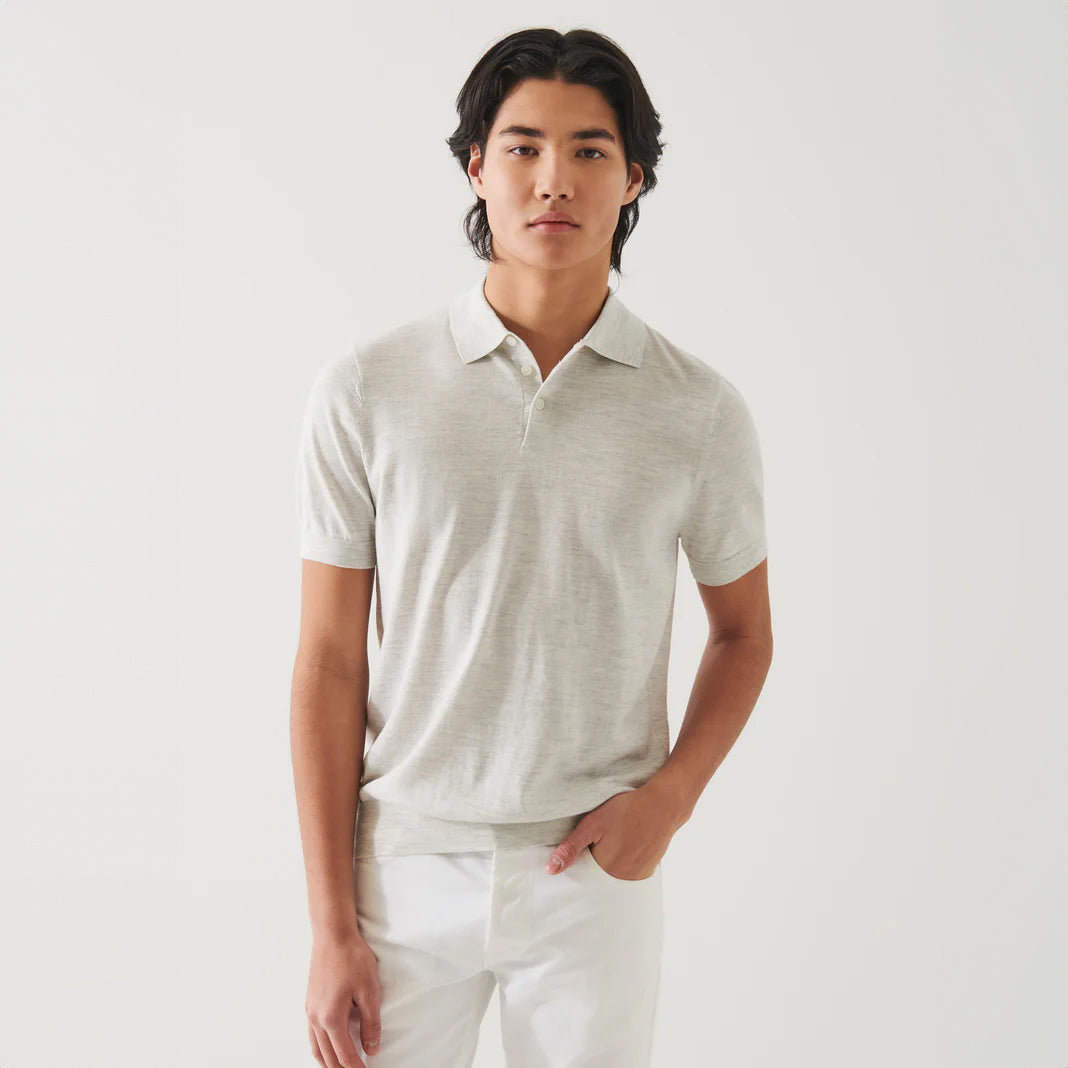
Then build the middle. Your tailoring already handles Tuesday to Thursday; what the hybrid week exposes is the gap between the suit and the sweatshirt, and that gap is filled almost entirely by knitwear — fine-gauge crews, knitted polos, half-zips. Five pieces that work at both desks will serve you better than ten that work at one. A $400 sweater worn a hundred days a year costs less per wearing than nearly anything else you own; we have made the cost-per-wear argument in these pages before, and the hybrid week only sharpens the arithmetic.
Colour helps too. The knits that travel best between office and home are the ones that sit under a jacket without argument — navy, gray, and this season's browns. If it looks right under your sport coat on Wednesday, it will look right on Friday's screen.
One standard, two addresses
Clothes worn forty hours a week earn tailoring, whichever desk they're worn at. A knit should skim rather than billow; a trouser hemmed to the proper break looks intentional even on the days only you can see it. Our tailors work in the store on Decarie, sleeves and hems rarely take more than a few days, and the pieces that do the double shift are exactly the ones worth the trouble — book a fitting and bring them in.
The office you visit three days a week still deserves your best. So does the one down the hall.
Shop this guide
A few pieces from our current selection that put the advice above into practice: