Cart
0
Every September brings a particular kind of man through our door on Decarie Boulevard. The new title came through over the summer — vice-president, managing director, a seat at the table he used to present to — and he has noticed, without being able to say exactly when it happened, that the men above him do not dress the way he expected. He wants to know how to dress like an executive, and he is slightly embarrassed to ask. He shouldn't be. The answer changed a generation ago, and most of the advice never caught up.
The tie left. The standard didn't.
The corner office of 1995 had a uniform, and it was easy: dark worsted suit, white shirt, a tie every day of the week. You could dress for seniority by formula. Walk a senior floor downtown today — Place Ville Marie, the towers around Windsor Station — and the ties are mostly gone. What surprises people is what replaced them. Not casualness. Precision.
Here is the pattern we see, over and over, in the executives we dress: the most senior man in the room is almost never the most formally dressed anymore. He is the most exactly dressed. His jacket fits as if it were made for him, often because it was. His knitwear is finer than everyone else's shirts. Nothing he wears carries a visible logo. The tie used to do the work of announcing rank; now the cloth and the fit do it, and they do it more quietly and more ruthlessly. A tie can be bought in five minutes on the way to the meeting. Fit cannot.
How to dress like an executive now
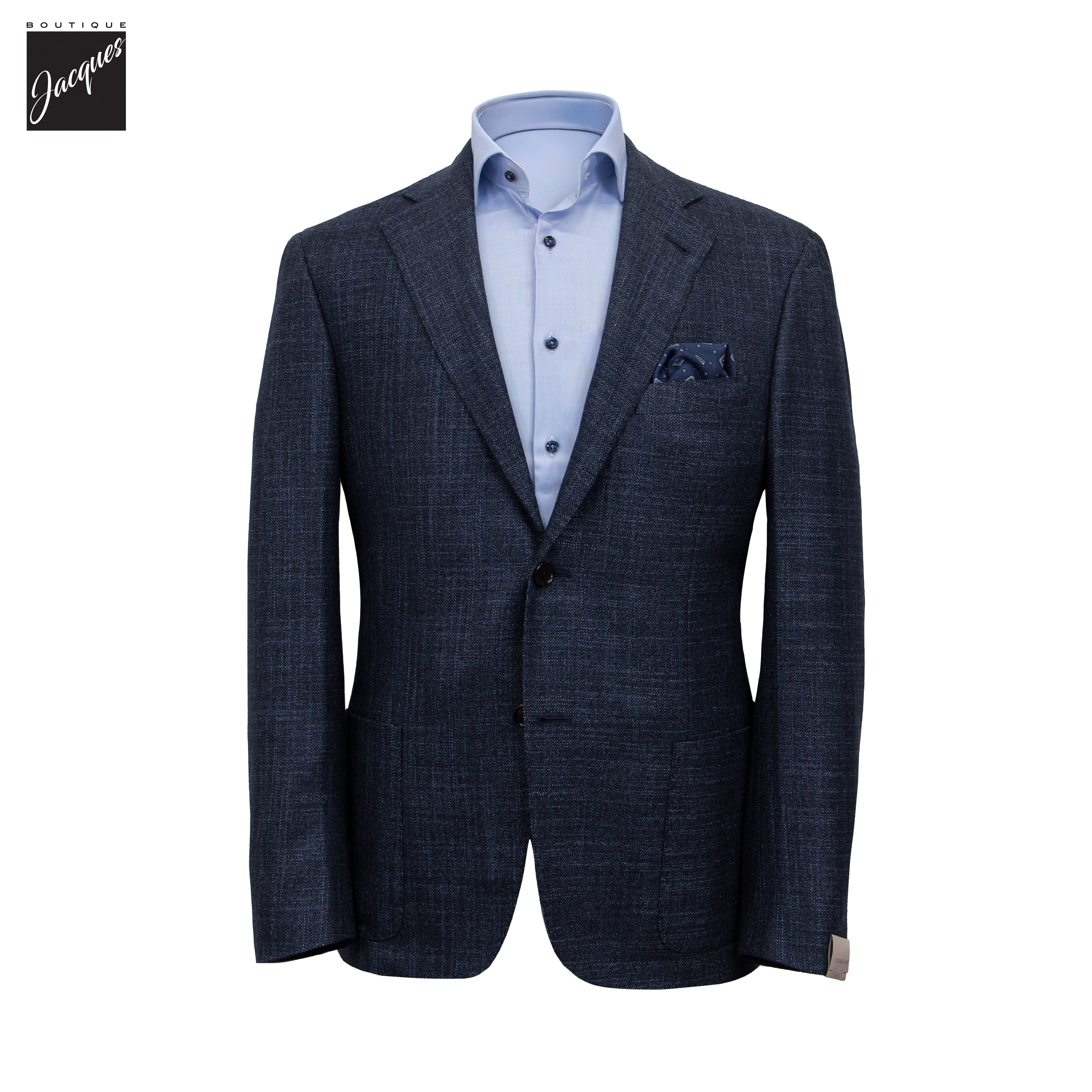
Start with texture. A senior wardrobe today is built on cloth that reads from across a boardroom: hopsack, mélange, wool-silk, flannel. The old suit-minus-the-tie shortcut fails because worsted suiting was drawn to sit under a tie, and without one it looks like something went missing — an opinion we have offered before and will keep offering. A textured jacket looks complete on its own. The Corneliani dark blue mélange wool-silk sport coat we brought in this fall ($1,895) is exactly this idea. From arm's length it is a quiet dark jacket. Up close, the weave has a depth flat suiting never will — and depth, not shine, is what senior looks like. Cut in Mantua, softly constructed, and it needs no accessory to be finished.
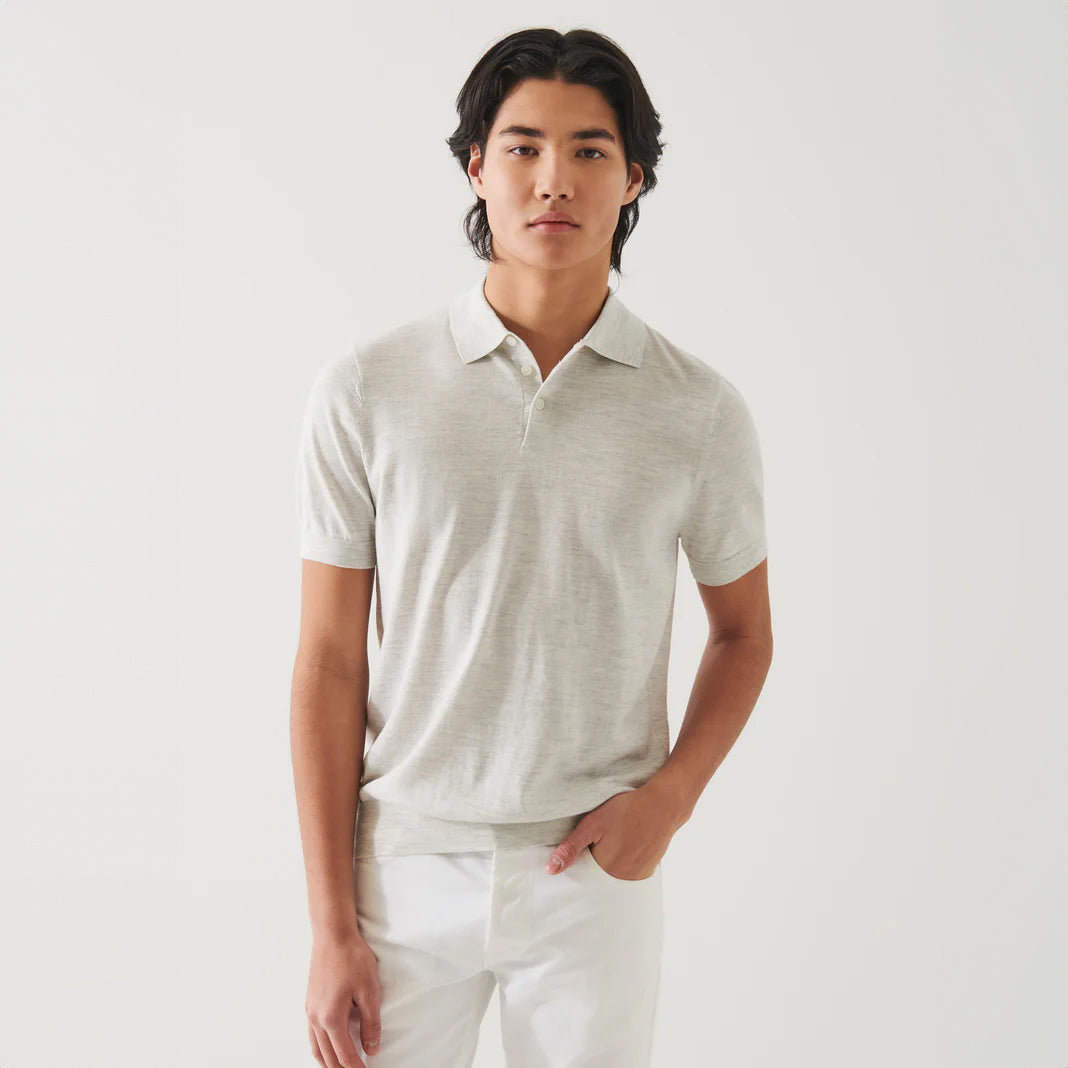
Under the jacket, knitwear has taken over the shirt's old job on most days. A fine-gauge crew under a tailored shoulder is now the default on Montreal's tie-optional senior floors, and the versions that succeed are wool fine enough to lie flat under a lapel — a knit with the surface of a sweatshirt undoes the whole argument. The Eleventy Platinum brown wool crewneck ($695) is our current favourite for the job: Milanese, slim without being tight, with a hand-stitched trim you only notice at conversation distance. And it is brown, which regular readers will know is where we think this season's authority lives. Navy under navy remains the safest answer; brown under dark blue is the more confident one.
Repeat yourself on purpose
The least discussed habit of well-dressed senior men is that they narrow as they rise. They do not broaden. By the time a man is running something, his wardrobe has usually collapsed into a uniform: grey flannel trousers, dark textured jackets, two or three knit colours, one shoemaker. This is not a failure of imagination. It is the same instinct that makes him decide quickly in meetings — he has spent his choices where they pay and eliminated the ones that don't. Nobody in the history of Canadian business was remembered for variety. Men are remembered for consistency, and consistency is only possible in clothes that fit well enough to buy again.
Which is why our honest advice to the newly promoted is to resist the celebratory shopping spree. Five loud new things read as arrival anxiety. The better move, the week the title changes, is to bring what you already own to our tailors — sleeves shortened to show a half-inch of cuff, jacket waists brought in, trousers tapered and re-hemmed — and then add one piece of unmistakable quality a season. A man who does this for two years quietly ends up the best-dressed person on his floor, and no one can say when it happened. That is the correct answer. The wardrobe should work like a promotion done well: obvious in retrospect, invisible in progress.
Where the uniform gets made
Eventually the narrowing leads somewhere specific: to cloth chosen on purpose and a pattern cut to one body — our made-to-measure room, where most of our longest-standing executive clients ended up. But there is no need to start there. Start with a jacket that fits, a knit that lies flat, trousers with a proper break, everything altered by the tailors we keep in-house. Our tailored clothing is on Decarie Boulevard seven days a week, and an appointment costs nothing but the hour. The corner office stopped announcing itself years ago. That is precisely why it has never been more carefully dressed.