A man will spend an hour in our fitting room getting a suit right. He will debate the sleeve length to the quarter inch, hold two shades of blue up to the window, ask our tailor's opinion and then ask it again. Then he will thread the same belt he has worn for ten years — cracked at the buckle, curled at the tip — through the loops of his new trousers and consider the matter closed. If you want to know how to choose a belt, start with this: it is the last thing most men buy and the first thing we notice when they walk through the door on Decarie. Not because we are looking for it. Because it sits at the exact centre of everything else you put on.
How to choose a belt: shoes first, then width
The oldest rule is still the best one. The belt matches the shoes — black with black, brown with brown — and it needs to be close in shade, not merely in the same family. A chestnut belt over espresso oxfords reads as an accident. We gave the same advice about watch straps in these pages back in September, and it holds here for the same reason: leather goods on one body should look like they were chosen by one man.
Width is the part nobody tells you. With tailoring, stay near three centimetres; the slim profile slides cleanly through trouser loops that were cut for it and disappears under a jacket. Wider belts are weekend belts — fine with denim, wrong with flannel trousers. And the buckle should be small, quiet, and silver-toned unless everything else you wear argues for gold. The best dress belt is the one nobody can describe after you leave the room.
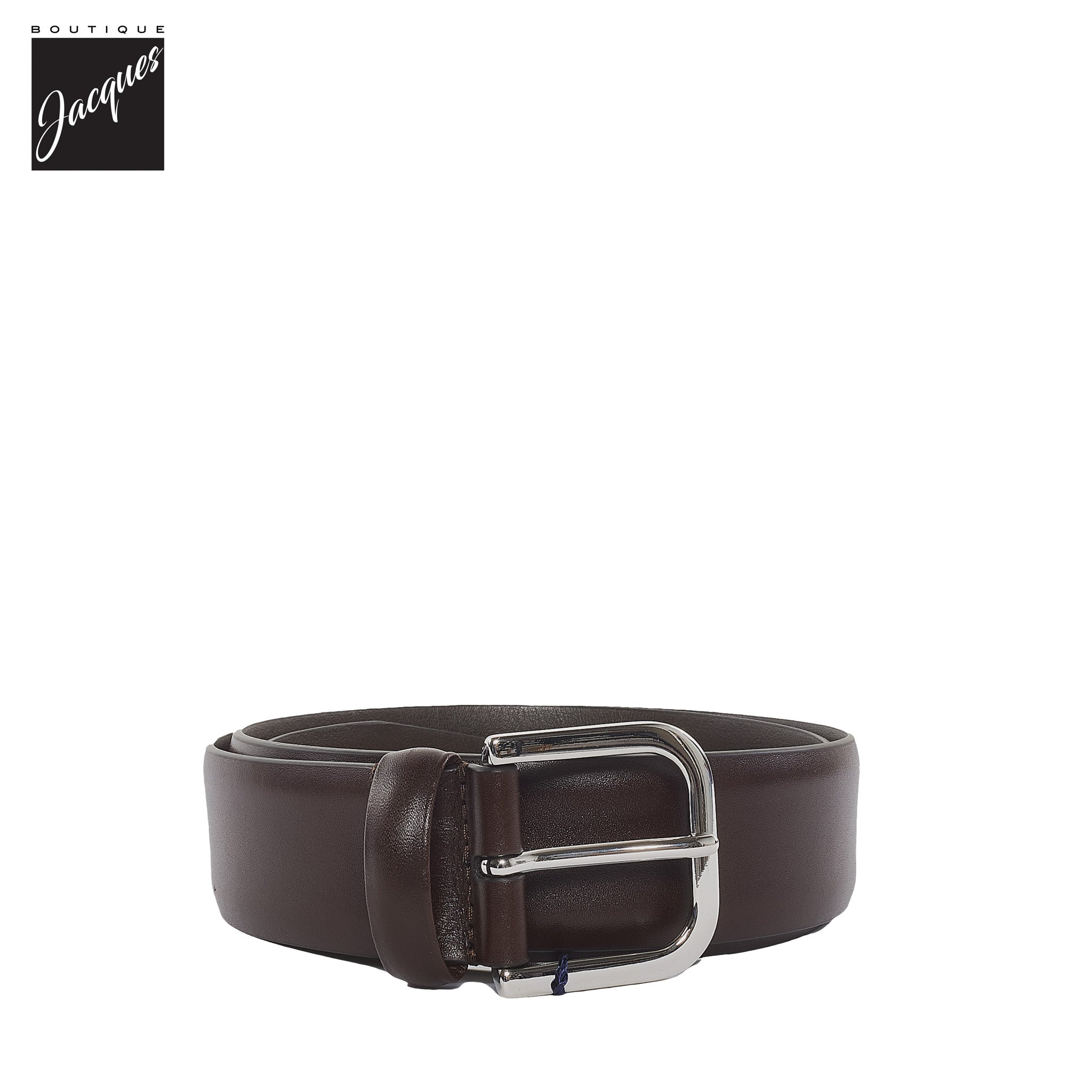
If you are buying one belt this fall, we would point you at the brown Nappa calf leather belt from Anderson's ($280). The leather is smooth and dense, the buckle is exactly as forgettable as it should be, and brown is where this season lives — we have been saying so since the September buy arrived. The same belt comes in black for the man whose week is suits and black oxfords, and he should own both, because the rule above is not optional.
The woven belt, or the most forgiving thing we sell
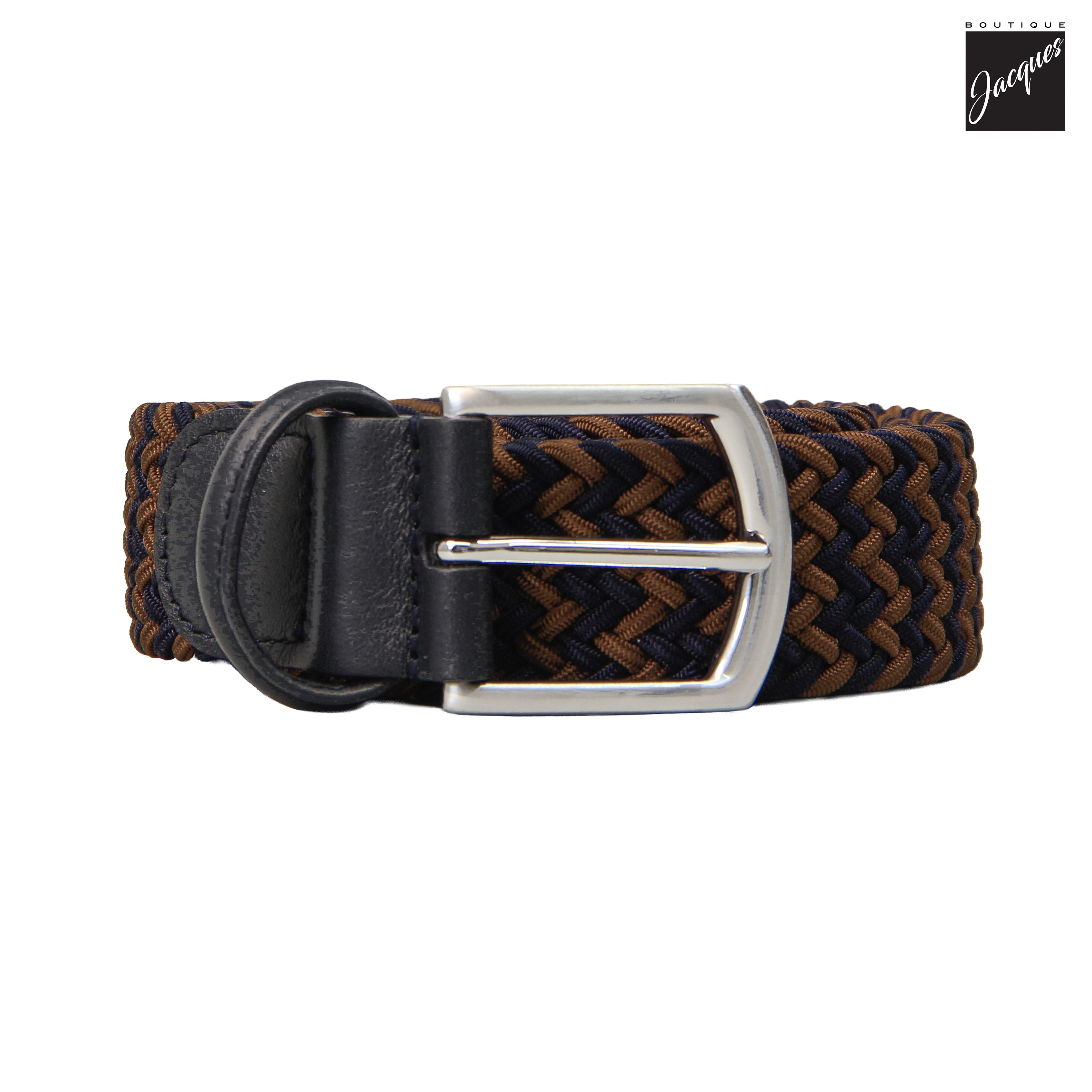
Anderson's has been making belts with Parma's leather artisans since 1966, and the house signature is the woven elastic belt — a braid of stretch cord finished with leather ends, made in Italy. It solves a problem the dress belt cannot: it has no holes. There is no choosing between the hole that is slightly too tight and the one that is slightly too loose; the buckle pins wherever you actually are, which on a day that includes a proper lunch is a moving target. It is, we would argue, the most Montreal belt we carry — built for a city that takes its meals seriously.
The solid navy woven belt ($240) is the one to start with. It belongs with five-pocket trousers, chinos, and the flannel-and-knit weekends we wrote about in September, and the texture of the braid does quietly for your waist what a hopsack jacket does for your shoulders. There is a hunter green on the belt wall right now for the man who has the navy already. If a man owns three belts, our vote is black calf, brown calf, and a navy woven — that covers every trouser we sell.
What a belt cannot do
A belt cinched to its last hole is not holding your trousers up. It is filing a report. We made this point about weekend jeans earlier this fall and it bears repeating with tailoring: if the waist is wrong, the answer is our tailors, not more tension. Taking in a trouser waist is one of the simplest alterations we do in-house, it costs far less than wearing good flannel bunched like a paper bag, and the belt goes back to its actual job, which is decoration with a buckle.
And sometimes the answer is no belt at all. Trousers with side adjusters were designed to fit without one; adding a belt to them is answering a question nobody asked. Empty loops on suit trousers, on the other hand, look unfinished in a boardroom — so a man in suits needs that quiet dress belt whether he likes it or not.
On sizing: a belt runs roughly two sizes above your trouser waist, but the honest method is to buy it standing in the trousers you mean to wear it with. The belt wall sits a few steps from our fitting rooms, which is not an accident. Come in, get the big things fitted, and then let the small things be exact. That order — fit first, details after — is most of what good dressing is.