There is no month in Montreal that asks more of a suit than December. The office party, the client lunch that stretches into dinner, the year-end tables in Old Montreal where the room is candlelit and the coat check is backed up to the door. Men who wear tailoring twice a year wear it four times in three weeks. So this is the month we find ourselves answering a question nobody quite asks out loud: suit etiquette. Not which suit to buy — we have written plenty on that — but how to wear the one you own. The small rules. They take five minutes to learn, and they are most of what separates the man who looks at ease in tailoring from the man who looks rented.
Suit etiquette begins with the buttons
The oldest rule is still the most broken: the bottom button of a suit jacket is never fastened. Standing, you close the top button on a two-button jacket, the middle on a three. The story traces back to King Edward VII, who grew too fond of dinner to close his bottom button, and whose court politely followed suit. Whatever the truth of it, a century of tailoring has since been cut around the rule — fasten the bottom button on a modern jacket and the skirt flares, the front pulls, and the whole garment sulks.
Sitting is the second half. Unbutton as you lower yourself into the chair — every time, automatically. This is not ceremony; it is physics. A buttoned jacket in a chair strains at its one closed point, presses an X of creases into the front, and slowly bullies the canvas out of shape. A man who sits buttoned through a two-hour dinner is ironing wrinkles into his own chest. When you stand, button again. Done smoothly, the gesture reads as composure — the tailoring equivalent of a firm handshake.
Pockets are architecture, not storage
First, the housekeeping a surprising number of men skip. A new jacket arrives with its vents basted shut in white thread and, often, a brand label tacked to the left sleeve. Both are shipping measures, nothing more. We snip them before anything leaves the store on Decarie, but suits bought elsewhere evidently escape intact — we spot a sewn vent or a sleeve label downtown every single December. Check yours tonight.
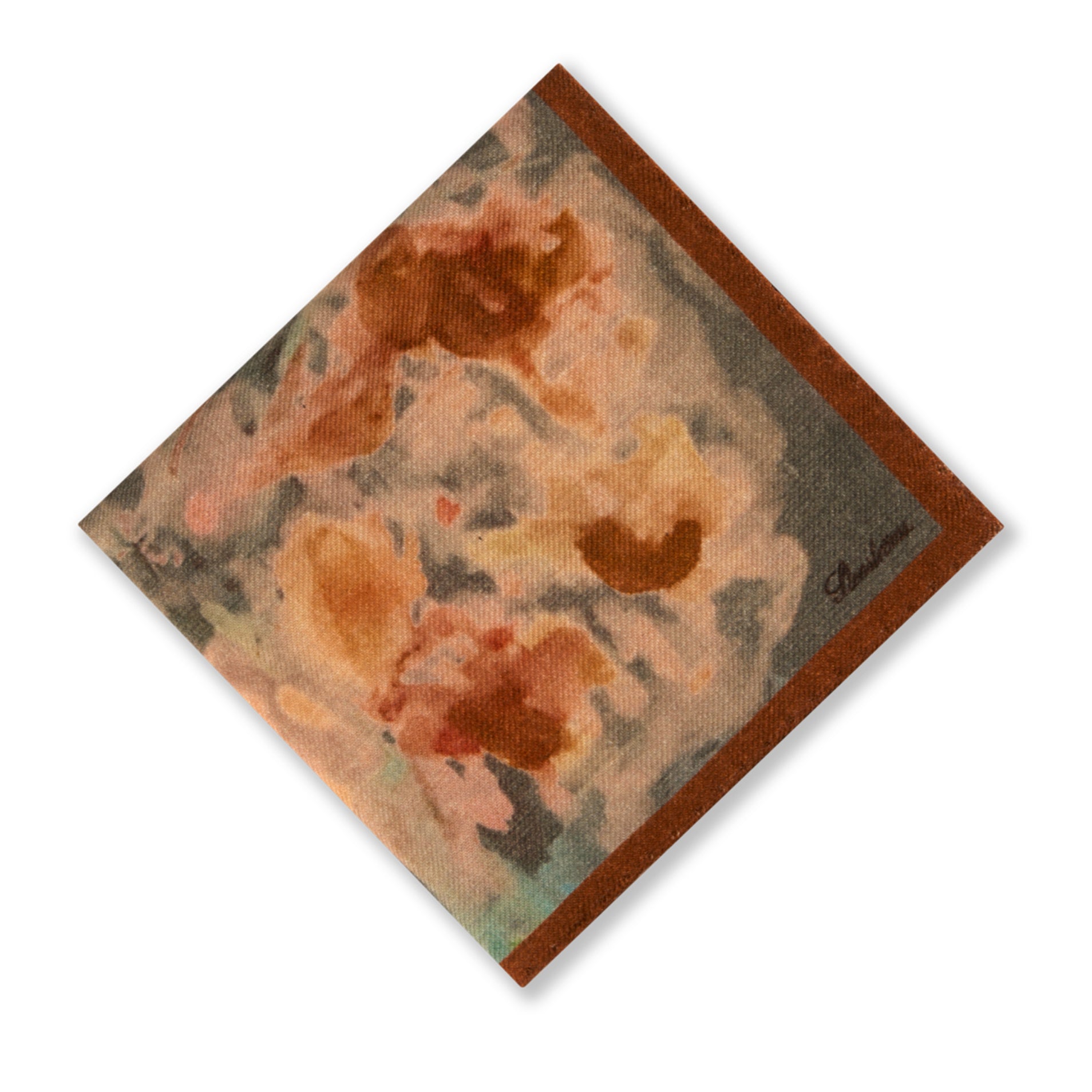
Then the discipline. The breast pocket takes a pocket square and nothing else; a phone printed through the chest of a jacket undoes a thousand dollars of cloth in one rectangle. The phone rides in an inside pocket if it is slim, and in your overcoat if it is not. The flap pockets at the hip are for almost nothing — a loaded hip pocket drags the line, bellows the silhouette, and ages a jacket faster than wearing it ever will, and keys will scar a lining for good. Walk past our tailored clothing and you will find some pockets still basted shut from the maker. That is how strongly the people who build these garments feel about what goes in them.
One hand resting in a trouser pocket at a party is relaxed. Both hands jammed in pulls the shoulders forward and undoes everything the shoulder construction was built to do. We promised opinions, so here is one: this rule matters more than the bottom button, and far fewer men know it.
Sitting, dinner, and the coat check
Some December specifics. The coat check exists for your overcoat, your scarf and your hat — not your suit jacket. The jacket stays with you; it is the outfit. At dinner it stays on, at minimum until the host removes his. His jacket coming off is the only invitation that counts, and even then you are free to decline it. If you do take yours off, remove it by the lapels, not yanked backwards off the shoulders, and square it over the chair back the way it hangs on a hanger. A suit jacket is not luggage.
One more, nearly extinct: the trouser hitch. A small pinch of cloth above each knee as you sit keeps the knees from bagging over a long evening. Your grandfather did it without thinking. Flannel and high-twist wools forgive a great deal, but they forgive even more if you help them.
The rules are easier in a suit that fits
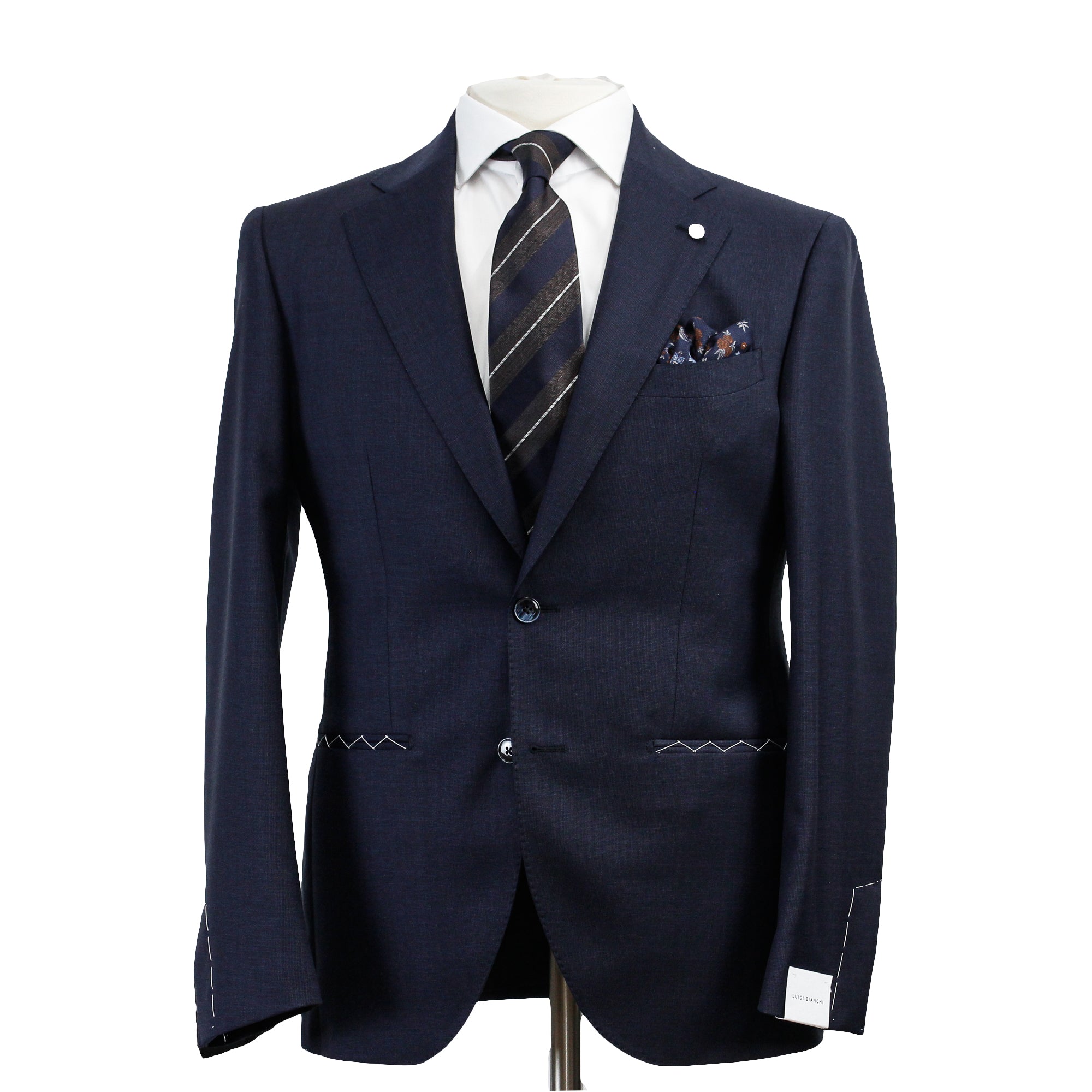
Every habit above is simpler in a jacket that is not fighting you. Unbuttoning smoothly is impossible when the front strains across the chest; sitting well is miserable in trousers cut too close to hitch. On our racks now there is a blue neat Luigi Bianchi Mantova suit in the house's contemporary Mantua cut — soft in the shoulder, with exactly the ease of movement these small gestures depend on — hanging alongside Jack Victor tailoring cut right here in Montreal. If the suit you are counting on this December has not been looked at since last winter, bring it in. Book a fitting and we will make sure that the only thing you have to think about at the party is the conversation.