Late November in Montreal presents a very particular problem, and it is not the one on the forecast. Outside it is minus six with a wind rehearsing for January. Inside, the building has found its winter setting, which is somewhere around twenty-four degrees. A sport jacket feels like armour by two in the afternoon; a sweater on its own, by the third video call, starts to read as loungewear. The piece that solves this is the overshirt, and because we now get asked how to wear an overshirt at the counter on Decarie Boulevard nearly every week, here is our honest answer.
First, the definition. An overshirt is cut like a shirt and built like a jacket: shirt collar, button front, sometimes a shirt cuff — but in boiled wool, wool flannel or a heavy knit, with the weight of light outerwear. Some houses call it a shirt jacket. There is also a portmanteau for it making the rounds that we decline to print.
What an overshirt is for — and what it is not
Let us be clear about the job. The overshirt replaces the fleece quarter-zip, the hoodie, and the cardigan with the conference logo on the chest. It does not replace the sport jacket. If the meeting matters — a client, a board, anyone you report to — wear the jacket. An overshirt is relaxed by design, and no amount of money makes it otherwise. We say this while selling them, so you can trust it.
Where it wins is everywhere else: the hybrid Tuesday with no external calls, the flight to Toronto, the Saturday errands that end in a decent lunch, and above all the overheated Montreal office, where it goes on and comes off a dozen times a day without ever looking like you got dressed twice. That is the whole trick. A garment you can remove and hang on the chair, and still look finished in what remains underneath.
How to wear an overshirt in a Montreal winter
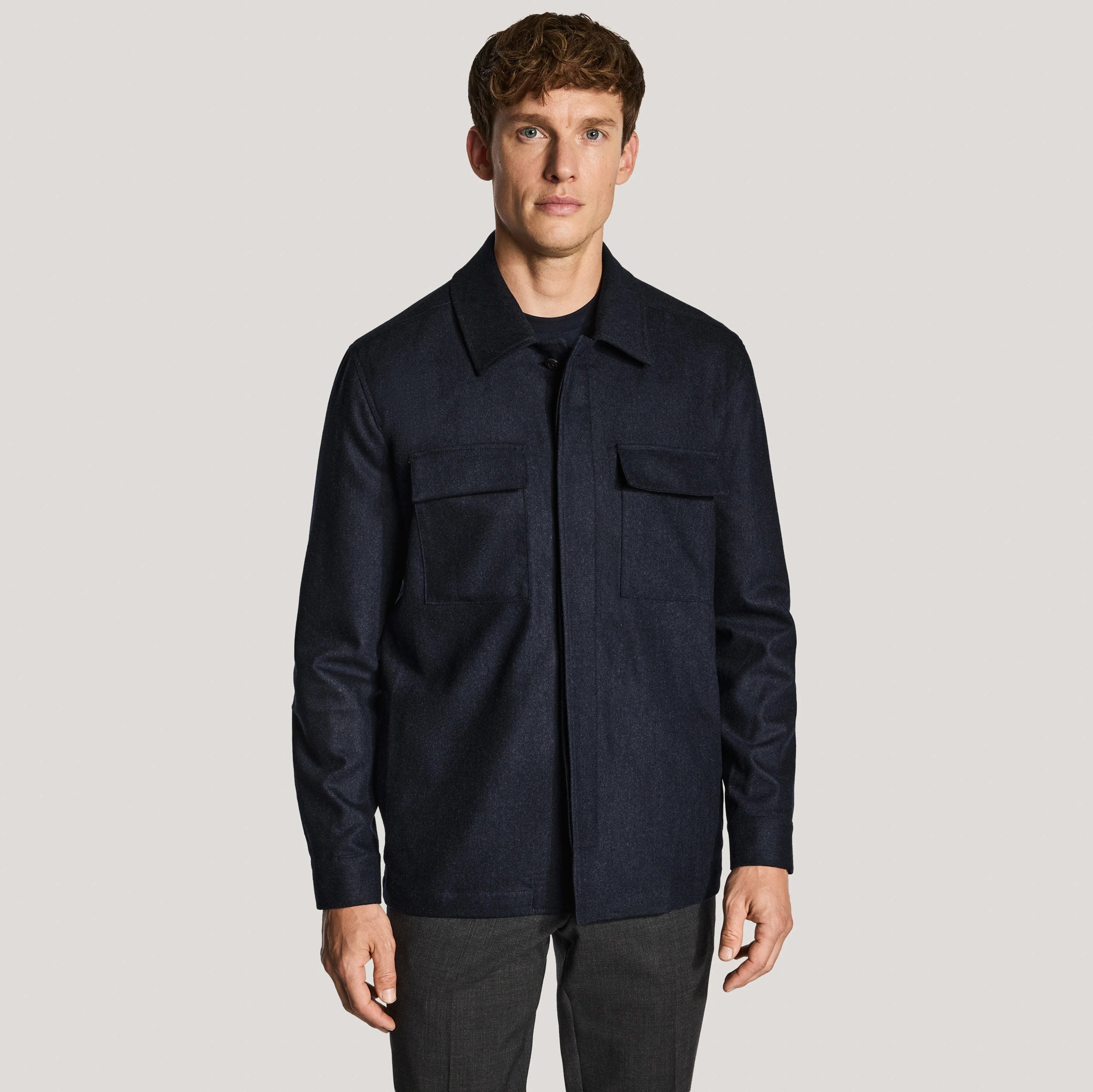
One layer underneath, never two. A dress shirt worn open, or a fine merino knit — nothing bulkier, or the shoulders start to strain and the whole thing reads as camping. The shoulder seam should sit at the end of your shoulder, the way a jacket's does; the hem should cover your seat pocket and stop there. Below it, flannel trousers or dark five-pocket pants both work. Over it, your overcoat goes on without a fight, because a good overshirt has no padding to bunch — which is exactly why we prefer it to a quilted gilet indoors.
On cloth, our opinion is firm: start with wool, and start with navy. Boiled wool in particular is the quiet genius of this category — dense enough to block a draught, breathable enough for the office furnace, and it shrugs off a flurry on the walk to lunch. The racks bear this out right now. Jack Victor's navy wool-stretch Colbey overshirt is cut fifteen minutes from our door and layers like it was designed for this city, because it was. ETON does its four-pocket version in an active wool that travels beautifully, in steel blue and an olive-brown mélange, alongside a navy boiled wool that may be the single most useful piece on the wall. Phil Petter's boiled-wool overshirts are laser-cut in Austria, the edges finished clean with no bulk at all. And Gran Sasso — new with us this fall — knits a cream cardigan-overshirt that blurs the line between sweater and jacket in the best way. You will find most of these among our new fall arrivals.
Which one to buy first
If you own one overshirt, make it navy wool: it takes a white shirt, a grey roll-neck, denim and flannel without a second thought. If your closet already leans dark, Stenströms' corduroy slimline at $315 is the gentlest way in, and their dark denim version is the weekend answer. The knit versions earn their keep if your week is mostly desk; the woven ones if you are in and out of the cold. Sleeves can be shortened the way a shirt's can, and our tailors do it in-house — if you want a second opinion on fit, book a half hour with us and bring the sweater you plan to wear under it.
One note of timing, since it is that week: our Black Friday tiers run through Sunday, November 30. If an overshirt has been on your list since the heating came on, this is the sensible moment. And if you remain loyal to the sport jacket in all weathers — good. We have been arguing that side since long before anyone invented a second name for the shirt.